
Happy Rich
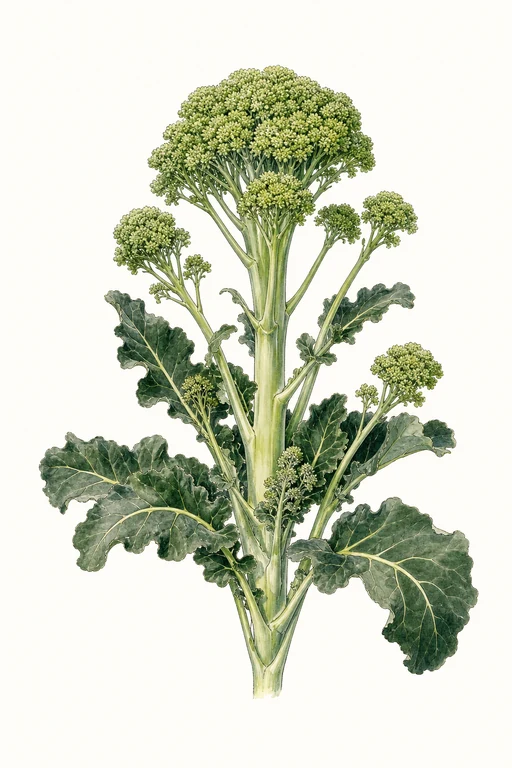
Tender, sweet florets with a fresh, green snap—Happy Rich broccolini delivers a vivid harvest that feels as lively as it looks.
Expect slender, crisp stems and compact crowns with a mild, broccoli-like flavor that shines in quick skillet roasts, bright sautéed sides, and silky sauces. For gardeners, it’s a rewarding 50-day crop that stays beautifully uniform, making it ideal for repeated harvests and elegant, plate-ready bunches.
Light: Full SunMaturity: 50 DaysHabit: Upright
Planting schedules and alerts are optimized for Columbus (Zone 6b).
Crop Dates
| Milestone | Date |
|---|---|
| Start Indoors | Mar 28th |
| Last Frost | Apr 25th |
| Transplant / Sow Outdoors | Apr 25th |
| Harvest Begins | Jun 14th |
| Harvest Ends | Oct 16th |
Crop Details
| Trait | Value |
|---|---|
| Days to Maturity | 50 |
| Sun Requirements | Full Sun |
| Growth Habit | Upright |
| Support Needed | None |
| Planting Depth | Normal |
| Germination Temp (°F) | 45 |
| Min Soil Temp (°F) | 45 |
| Min Night Temp (°F) | 35 |
| Harden Off (days) | 6 |
Culinary Notes

Chef's Note
Happy Rich broccolini is built for speed: slender stems crisp up fast and the compact crowns stay sweet without turning bitter. Give it a hot pan and a squeeze of lemon, then finish with parmesan or toasted almonds for a bright, green-to-nut contrast.

Best Uses
- hot skillet roast with olive oil and lemon zest for browned edges
- fast sauté as a side—keep it crisp, not sulfurous
- blanch-and-shock for silky texture in pasta tosses
- stir into a creamy sauce to balance the richness with a clean bite

Flavor Profile

Frequently Asked Questions
What pest or disease is most likely on Brassica oleracea var. italica (broccoli/“Happy Rich”), and how can I control it at home?
How often should I water Brassica oleracea var. italica during the main growing phase?
How do I know when Brassica oleracea var. italica is ready to harvest?
Sowing Tips

Transplant Conditions
Wait until soil reaches 45°F and nights stay above 35°F before moving outdoors. Harden off for 6 days first.
Expert Note

For best tenderness and sweetness, keep growth cool and harvest florets early—once heads start tightening too much, quality drops.