
Helenor
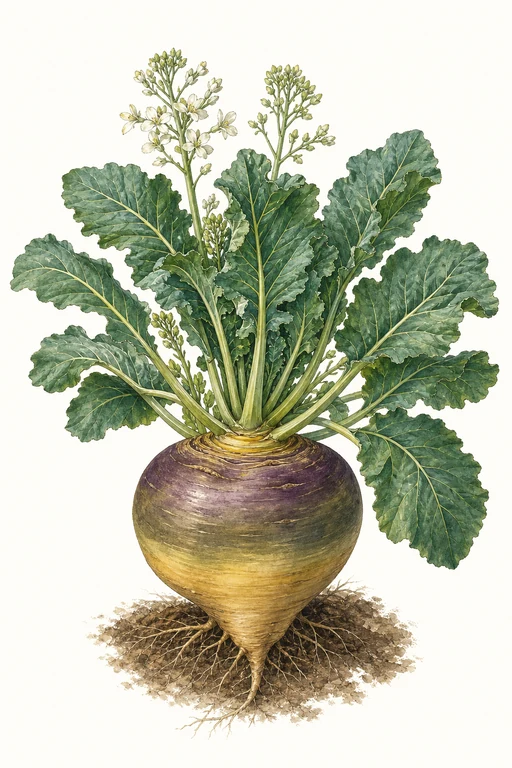
Rich, sweet-savor depth blooms as Helenor rutabaga matures—its flesh turns a warm, butter-gold that feels luxuriously dense and smooth.
Expect a firm, fine-grained texture with a gentle, mellow bite that shines in roasted roots and hearty mash, and it also performs beautifully for braises and tangy pickled preparations. Grow Helenor for a dependable 95-day season that rewards patient gardeners with a striking, harvest-ready root and a flavor that lingers pleasantly on the palate.
Light: Full SunMaturity: 95 DaysHabit: Taproot
Planting schedules and alerts are optimized for Columbus (Zone 6b).
Crop Dates
| Milestone | Date |
|---|---|
| Start Indoors | Direct Sow |
| Last Frost | Apr 25th |
| Transplant / Sow Outdoors | Apr 25th |
| Harvest Begins | Jul 29th |
| Harvest Ends | Oct 16th |
Crop Details
| Trait | Value |
|---|---|
| Days to Maturity | 95 |
| Sun Requirements | Full Sun |
| Growth Habit | Taproot |
| Support Needed | None |
| Planting Depth | Normal |
| Germination Temp (°F) | 45 |
| Min Soil Temp (°F) | 40 |
| Min Night Temp (°F) | 28 |
| Harden Off (days) | Not Required |
Culinary Notes

Chef's Note
Helenor’s dense, fine-grained flesh roasts into a caramel-adjacent sweetness without turning bitter, so it holds up to high heat and stays silky, not grainy. It’s built for patient braises and tangy pickling—your acid and aromatics can really get in there and make it sing.

Best Uses
- roasted root wedges with caramelized edges
- hearty rutabaga mash with butter and cream
- braises where it tenderizes into velvety cubes
- tangy quick-pickles for a sharp, mellow crunch

Flavor Profile

Frequently Asked Questions
What’s the most common disease issue for Brassica napus var. napobrassica (Helenor) and how do I control it?
How often should I water Brassica napus var. napobrassica during the main growing phase?
How can I tell when Brassica napus var. napobrassica (Helenor) is ready to harvest?
Sowing Tips

Transplant Conditions
Wait until soil reaches 40°F and nights stay above 28°F before moving outdoors.
Expert Note

For best disease performance and uniform roots, keep soil evenly moist and avoid letting plants get too heat-stressed—rutabagas do best as cool-season crops.