
Hestia
Sweetly nutty and deeply savory, Hestia Brussels sprouts develop a tender, fine-grained bite with a gentle, caramel-leaning richness as the cool season settles in.
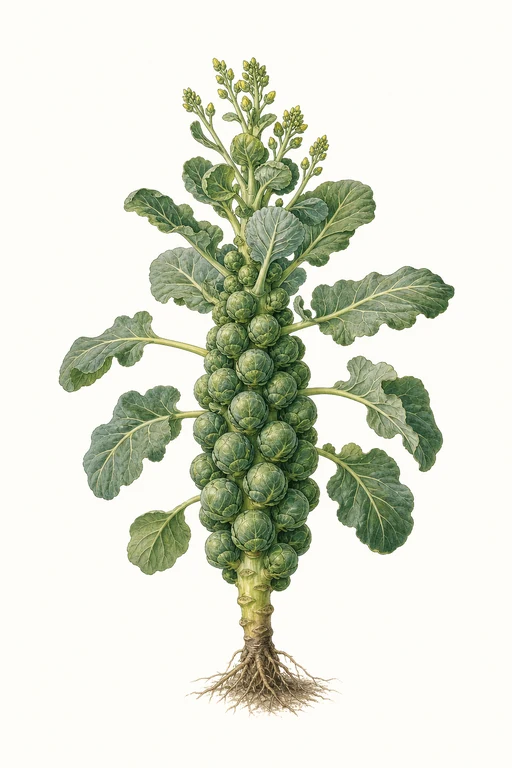
Compact heads sit along sturdy stems, offering a satisfying texture that turns especially appealing when roasted to golden edges or simmered into silky sauces. A dependable 75-day performer for gardeners who want a refined harvest from a classic Brussels sprout form.
Light: Full SunMaturity: 75 DaysHabit: Rosette
Planting schedules and alerts are optimized for Columbus (Zone 6b).
Crop Dates
| Milestone | Date |
|---|---|
| Start Indoors | Mar 28th |
| Last Frost | Apr 25th |
| Transplant / Sow Outdoors | May 2nd |
| Harvest Begins | Jul 16th |
| Harvest Ends | Oct 16th |
Crop Details
| Trait | Value |
|---|---|
| Days to Maturity | 75 |
| Sun Requirements | Full Sun |
| Growth Habit | Rosette |
| Support Needed | None |
| Planting Depth | Normal |
| Germination Temp (°F) | 45 |
| Min Soil Temp (°F) | 40 |
| Min Night Temp (°F) | 30 |
| Harden Off (days) | 6 |
Culinary Notes

Chef's Note
Hestia leans sweet-nutty with a savory backbone, so it loves browning—high heat gives you caramel edges without turning the center to mush. Use acidic partners like lemon or balsamic to sharpen the brassica sweetness, and finish with butter or parmesan to cling to every leaf.

Best Uses
- roasting on high heat until deeply golden at the edges (renders sweetness, keeps centers tender)
- pan-searing then finishing with a splash of stock for glossy, sauce-coating leaves
- shaving or halving and tossing into warm grain bowls with a sharp vinaigrette to cut the richness
- braising/simmering into a silky gratin or purée-style side with dairy or tahini

Flavor Profile

Frequently Asked Questions
What pest or disease commonly affects Brussels sprouts (Brassica oleracea var. gemmifera), and what should I do if I see it?
How often should I water Brussels sprouts during the main growing period?
How can I tell when Brussels sprouts are ready to harvest?
Sowing Tips

Transplant Conditions
Wait until soil reaches 40°F and nights stay above 30°F before moving outdoors. Harden off for 6 days first.
Expert Note

For the sweetest flavor, keep plants consistently cool and avoid letting them overheat in warm spells—containers can be moved to partial shade during late warm afternoons.