
Holy Kale! Blend
Holy Kale!
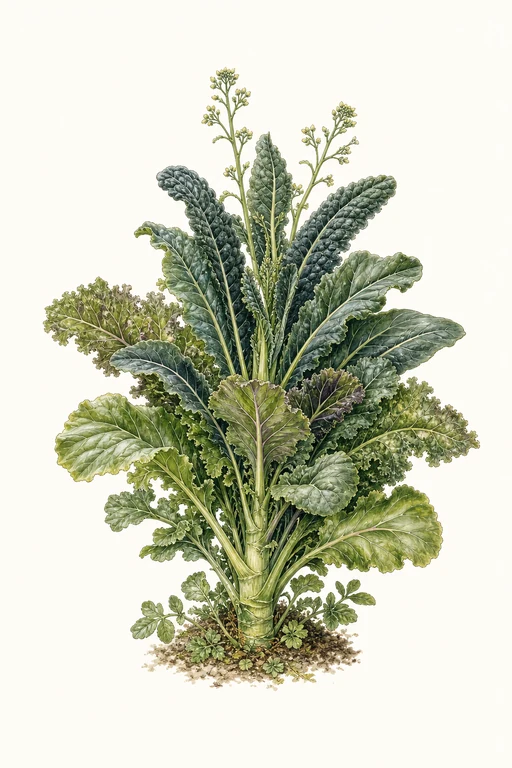
Blend bursts with a lush, garden-deep palette—tender leaves with a crisp, succulent bite and a gentle, sweet-green flavor that feels both fresh and satisfying. This kale mix forms an abundant rosette of richly textured foliage, ranging from smooth to lightly ruffled surfaces, perfect for building colorful harvests again and again. Grow it for vibrant salads and bright sautés, or for robust blends in hearty sauces and quick pickling—its character stays vivid from first picking through the season.
Light: Full SunMaturity: 50 DaysHabit: Rosette
Planting schedules and alerts are optimized for Columbus (Zone 6b).
Crop Dates
| Milestone | Date |
|---|---|
| Start Indoors | Mar 28th |
| Last Frost | Apr 25th |
| Transplant / Sow Outdoors | Apr 18th |
| Harvest Begins | Jun 7th |
| Harvest Ends | Oct 16th |
Crop Details
| Trait | Value |
|---|---|
| Days to Maturity | 50 |
| Sun Requirements | Full Sun |
| Growth Habit | Rosette |
| Support Needed | None |
| Planting Depth | Normal |
| Germination Temp (°F) | 45 |
| Min Soil Temp (°F) | 40 |
| Min Night Temp (°F) | 30 |
| Harden Off (days) | 6 |
Culinary Notes

Chef's Note
This blend lands in that sweet spot where the leaves stay pleasantly crisp yet soften fast in a hot pan—no chalky, cabbagey punishment. Use it for salads that can take dressing, or for sautés and pickles where you want the green flavor to stay vivid.

Best Uses
- raw massaged salad with a silky vinaigrette
- quick sauté with a splash of acid to keep it bright
- hearty kale pesto (blended with nuts and cheese) where the leaves stay lively
- quick-pickled kale for tangy, crunchy bite

Flavor Profile

Frequently Asked Questions
What pest or disease most commonly affects Brassica oleracea (holy kale) and how do I fix it?
How often should I water holy kale during peak growth?
How do I know when my holy kale (Brassica oleracea) is ready to harvest?
Sowing Tips

Transplant Conditions
Wait until soil reaches 40°F and nights stay above 30°F before moving outdoors. Harden off for 6 days first.
Expert Note

For the sweetest flavor, keep kale growing steadily in cool weather and avoid letting it dry out between harvests.