
Huckleberry Gold
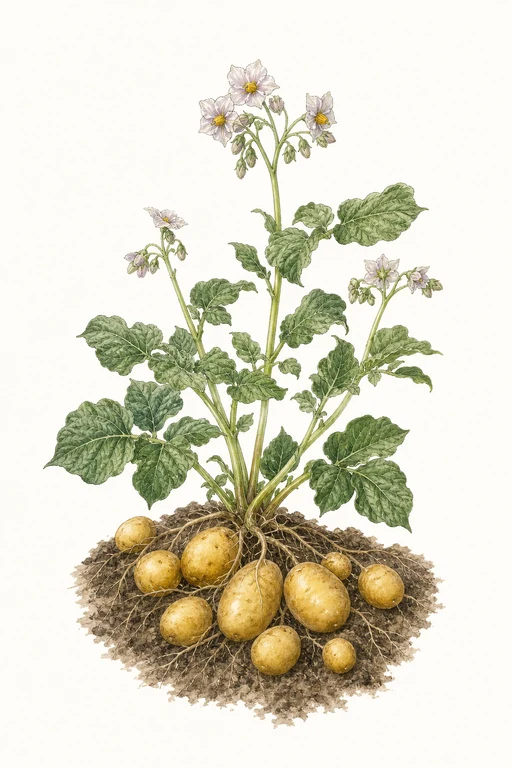
Sunlit and velvety, Huckleberry Gold delivers a rich golden flesh that tastes buttery-sweet with a gentle, earthy depth.
At maturity, the tubers form with an even, smooth skin and a tender, fine-grained texture that holds its color beautifully when roasted or pan-crisped, and also shines in creamy mashes and hearty gratins. Grow Huckleberry Gold for a dependable 85-day season and a harvest that feels like a small treasure chest of warm, golden comfort.
Light: Full SunMaturity: 85 DaysHabit: Spreading
Crop Dates : 5a
| Milestone | Date |
|---|---|
| Start Indoors | Direct Sow |
| Last Frost | May 8th |
| Transplant / Sow Outdoors | May 8th |
| Harvest Begins | Aug 1st |
| Harvest Ends | Sep 30th |
Crop Details
| Trait | Value |
|---|---|
| Days to Maturity | 85 |
| Sun Requirements | Full Sun |
| Growth Habit | Spreading |
| Support Needed | None |
| Planting Depth | Normal |
| Germination Temp (°F) | 50 |
| Min Soil Temp (°F) | 45 |
| Min Night Temp (°F) | 28 |
| Harden Off (days) | Not Required |
Culinary Notes

Chef's Note
This yellow-fleshed potato leans sweet and velvety, so it rewards heat that browns rather than steams. It stays creamy-fine-grained in mash and gratin, and it keeps its warm color beautifully when roasted or pan-crisped.

Best Uses
- golden, pan-crisp potatoes with a crisp crust and creamy center
- creamy mash where it stays silky instead of turning starchy
- roasted wedges that caramelize evenly without going gray
- hearty gratins that keep their color and fine texture

Flavor Profile

Frequently Asked Questions
What common pest or disease affects Solanum tuberosum (potatoes), and what should I do?
How often should I water potatoes during the main growing phase, and what soil moisture is best?
How can I tell when my potatoes are ready to harvest?
Sowing Tips

Transplant Conditions
Wait until soil reaches 45°F and nights stay above 28°F before moving outdoors.
Expert Note

Plant certified seed potatoes after soil warms and then keep them hilled as sprouts grow to prevent greening and improve yield.