
Illumination Orange
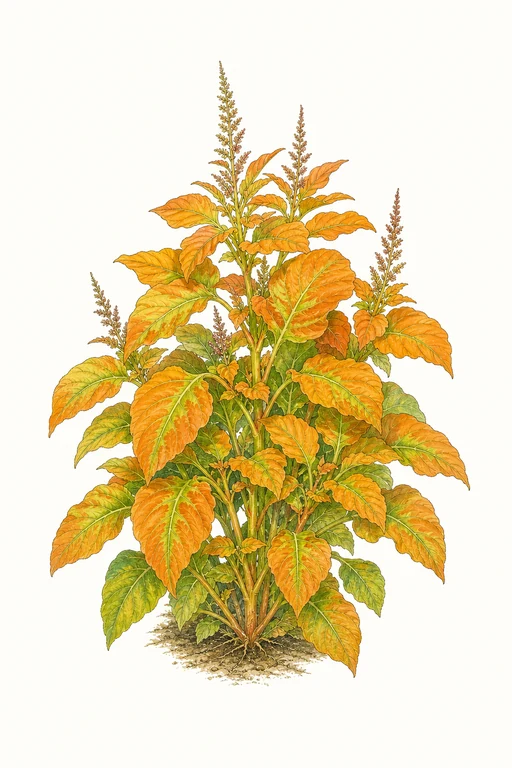
Sunlit at first glance, Illumination Orange leaf amaranth unfurls in vivid bands of warm orange and golden-green that glow above the garden bed.
Tender, spoon-shaped leaves carry a mild, pleasantly grassy bite with a soft, succulent texture—ideal for quick tosses, silky sauces, and vibrant pickling brines where color holds its own. Grow it for a bold harvest window around 35 days, when the foliage is most lush and richly colored.
Light: Full SunMaturity: 35 DaysHabit: Upright
Planting schedules and alerts are optimized for Columbus (Zone 6b).
Crop Dates
| Milestone | Date |
|---|---|
| Start Indoors | Direct Sow |
| Last Frost | Apr 25th |
| Transplant / Sow Outdoors | Apr 25th |
| Harvest Begins | May 30th |
| Harvest Ends | Oct 16th |
Crop Details
| Trait | Value |
|---|---|
| Days to Maturity | 35 |
| Sun Requirements | Full Sun |
| Growth Habit | Upright |
| Support Needed | None |
| Planting Depth | Surface |
| Germination Temp (°F) | 70 |
| Min Soil Temp (°F) | 60 |
| Min Night Temp (°F) | 40 |
| Harden Off (days) | Not Required |
Culinary Notes

Chef's Note
Illumination Orange leaf amaranth eats like a tender, grassy green that stays supple rather than fibrous, so it folds fast and keeps color when it hits heat or vinegar. Use it where you want a soft wilt or a quick pickle—its mild bite won’t bully citrus, garlic, or chili, it just glows.

Best Uses
- quick sauté or flash-wilt with garlic and chili before it turns watery
- silky blended green sauce (tossed through pasta or spooned over eggs)
- bright pickling brine applications where the orange bands stay vivid
- raw chiffonade in salads for a light, edible-grass crunch

Flavor Profile

Frequently Asked Questions
What pests or diseases commonly hit Amaranthus tricolor (illumination orange), and how can I manage them?
How often should I water Amaranthus tricolor during its main growing phase (about the first 3–5 weeks)?
How do I know when Amaranthus tricolor is ready to harvest?
Sowing Tips

Transplant Conditions
Wait until soil reaches 60°F and nights stay above 40°F before moving outdoors.
Expert Note

For the best tender leaf harvest, sow after frost when soil is warm and keep seedlings evenly moist until established.