
Illusion Emerald Lace
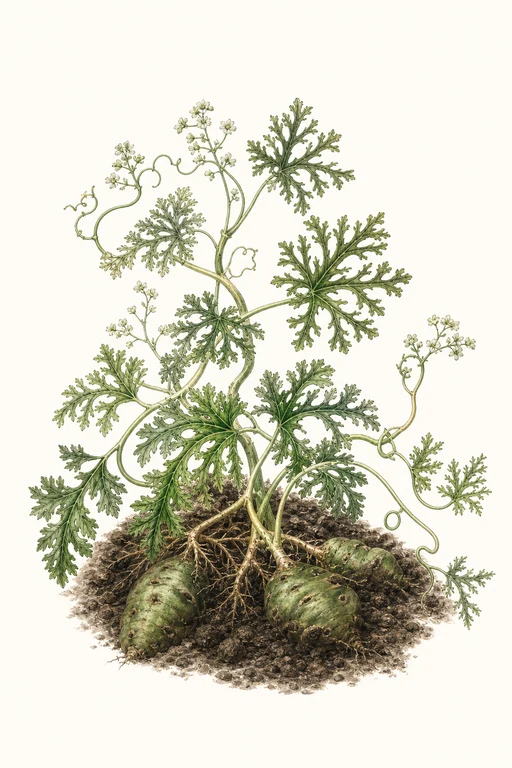
Feel the spell of Illusion Emerald Lace as its trailing foliage spills in luminous, emerald-green rosettes—an ornamental sweet potato grown for its living tapestry.
The leaves form delicate, lace-like edges with a crisp, velvety look that catches light beautifully from every angle, while the tubers develop beneath the soil with a subtle, earthy charm. Ideal for containers, edging, and summer displays, this variety delivers long-lasting, showy color and a graceful, vine-forward presence all season long.
Light: Full SunMaturity: 100 DaysHabit: Vine
Planting schedules and alerts are optimized for Columbus (Zone 6b).
Crop Dates
| Milestone | Date |
|---|---|
| Start Indoors | Direct Sow |
| Last Frost | Apr 25th |
| Transplant / Sow Outdoors | Apr 25th |
| Harvest Begins | Aug 3rd |
| Harvest Ends | Oct 16th |
Crop Details
| Trait | Value |
|---|---|
| Days to Maturity | 100 |
| Sun Requirements | Full Sun |
| Growth Habit | Vine |
| Support Needed | None |
| Planting Depth | Normal |
| Germination Temp (°F) | 75 |
| Min Soil Temp (°F) | 65 |
| Min Night Temp (°F) | 55 |
| Harden Off (days) | 10 |
Culinary Notes

Chef's Note
Even though it’s grown for its lacey emerald foliage, the leaves and tubers behave like classic sweet potato—use the greens quickly so they stay crisp-tender, and treat the tubers to dry heat so their starches go creamy instead of watery.

Best Uses
- quick-sautéed sweet potato leaves with garlic and chili
- blanched-and-drained leaves dressed while warm
- roasted or pan-caramelized tuber wedges for a soft, sweet center
- tuber mash folded into herb-forward fillings

Flavor Profile

Frequently Asked Questions
What pest or disease problem is most common for Ipomoea batatas (sweet potato) and how should I treat it?
How often should I water Ipomoea batatas during the main growing phase, and what soil moisture level should I aim for?
How can I tell when Ipomoea batatas is ready to harvest?
Sowing Tips

Transplant Conditions
Wait until soil reaches 65°F and nights stay above 55°F before moving outdoors. Harden off for 10 days first.

Direct Sow Preferred
Sensitive roots — does not transplant well. If starting indoors, use biodegradable pots and disturb roots as little as possible when moving outdoors.
Expert Note

Grow as a warm-season ornamental by planting slips after nights reliably stay warm, and cut back/freeze-protect for winter over any mild areas.