
Jade Cross E Brussels Sprout
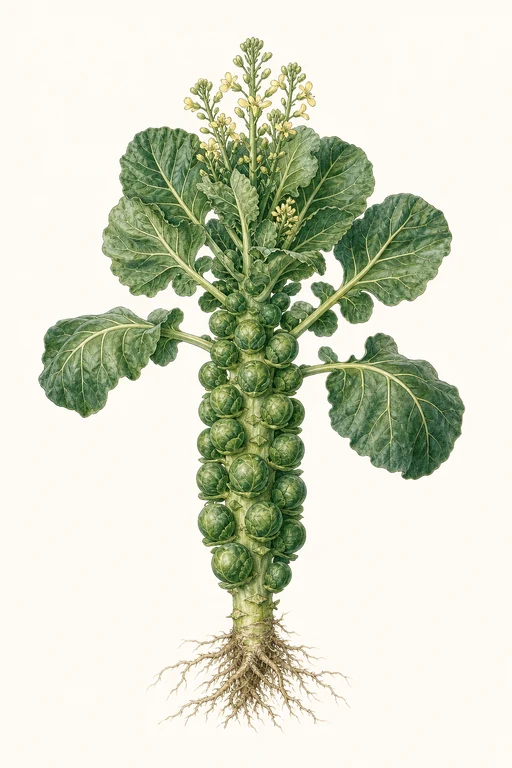
Sweet, nutty flavor with a clean, jade-bright character—Jade Cross E Brussels Sprout forms compact sprouts that feel dense and velvety to the touch.
At maturity, the heads develop a rich deep forest-green sheen and a tight, layered texture that holds its charm whether you’re savoring them straight from the garden or turning them into glossy, savory preparations. Grow this standout for a steady harvest window and a striking, ornamental look in the bed through the season.
Light: Full SunMaturity: 85 DaysHabit: Upright
Planting schedules and alerts are optimized for Columbus (Zone 6b).
Crop Dates
| Milestone | Date |
|---|---|
| Start Indoors | Mar 28th |
| Last Frost | Apr 25th |
| Transplant / Sow Outdoors | Apr 18th |
| Harvest Begins | Jul 12th |
| Harvest Ends | Oct 16th |
Crop Details
| Trait | Value |
|---|---|
| Days to Maturity | 85 |
| Sun Requirements | Full Sun |
| Growth Habit | Upright |
| Support Needed | None |
| Planting Depth | Normal |
| Germination Temp (°F) | 45 |
| Min Soil Temp (°F) | 45 |
| Min Night Temp (°F) | 28 |
| Harden Off (days) | 6 |
Culinary Notes

Chef's Note
Jade Cross E brings a tighter, more velvety sprout structure with a sweet, nutty snap that doesn’t collapse into bitterness when roasted hard. Treat it like a small, layered cabbage—cut for even browning, then finish with acid and fat so the flavor stays jade-bright, not sulfurous.

Best Uses
- hot-roast on a sheet pan until the edges go deeply caramelized
- shave and toss raw with lemon, salt, and olive oil for a crisp, bright crunch
- pan-fry or sear cut sprouts for a glossy, browned exterior
- braise briefly with butter until tender but still structured

Flavor Profile

Frequently Asked Questions
What pest or disease most commonly affects Brassica oleracea var. gemmifera (Brussels sprouts), and how do I manage it?
How often should I water Brassica oleracea var. gemmifera during its main growing phase?
How can I tell when Brassica oleracea var. gemmifera is ready to harvest?
Sowing Tips

Transplant Conditions
Wait until soil reaches 45°F and nights stay above 28°F before moving outdoors. Harden off for 6 days first.
Expert Note

For the earliest, most uniform heads, start indoors on time and transplant into consistently moist soil as soon as night temperatures are reliably above freezing.