
Jerusalem Artichoke
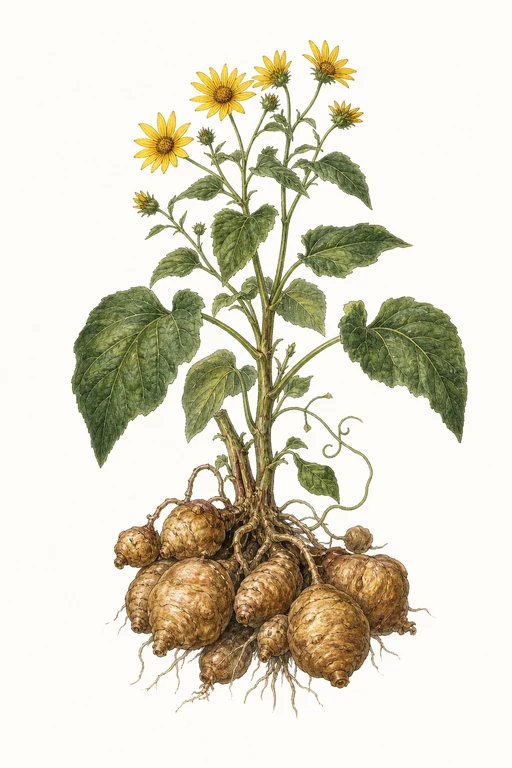
Honeyed, nutty-sweet flavor with a tender, crisp bite—Jerusalem Artichoke forms knobby, globe-like tubers that roast up beautifully and develop a caramel depth.
The flesh is pleasantly firm and earthy, with a subtle artichoke-like character that shines in hearty preparations and savory preserves. Grow this vigorous, late-season favorite for a dependable harvest at about 90 days and a pantry-worthy bounty from one sturdy planting.
Light: Full SunMaturity: 90 DaysHabit: Clumping
Planting schedules and alerts are optimized for Columbus (Zone 6b).
Crop Dates
| Milestone | Date |
|---|---|
| Start Indoors | Direct Sow |
| Last Frost | Apr 25th |
| Transplant / Sow Outdoors | Apr 25th |
| Harvest Begins | Jul 24th |
| Harvest Ends | Oct 16th |
Crop Details
| Trait | Value |
|---|---|
| Days to Maturity | 90 |
| Sun Requirements | Full Sun |
| Growth Habit | Clumping |
| Support Needed | None |
| Planting Depth | Normal |
| Germination Temp (°F) | 65 |
| Min Soil Temp (°F) | 50 |
| Min Night Temp (°F) | 35 |
| Harden Off (days) | Not Required |
Culinary Notes

Chef's Note
This is the tuber that rewards brute heat: roast it hard and it turns honey-nutty and deeply caramel at the edges while keeping a pleasantly firm crunch. Its faint artichoke vibe loves butter, garlic, and lemon—build your seasoning around that roast-and-citrus contrast.

Best Uses
- high-heat roasting until deeply caramelized at the edges
- thin shaved salad or slaw with acidic vinaigrette for snap
- pan-seared coins for a nutty, caramel crust
- slow-simmered soups or purees with stock and butter

Flavor Profile

Frequently Asked Questions
What pest or disease most often affects Cynara scolymus (Jerusalem artichoke) and how can I manage it?
How often should I water Jerusalem artichoke during peak growth, and what soil moisture level should I aim for?
How do I tell when Jerusalem artichoke is ready to harvest?
Sowing Tips

Transplant Conditions
Wait until soil reaches 50°F and nights stay above 35°F before moving outdoors.
Expert Note

Plant sunchoke tubers in spring after the ground warms, then leave them undisturbed—this crop spreads and rewards steady moisture.