
Jing Orange Okra
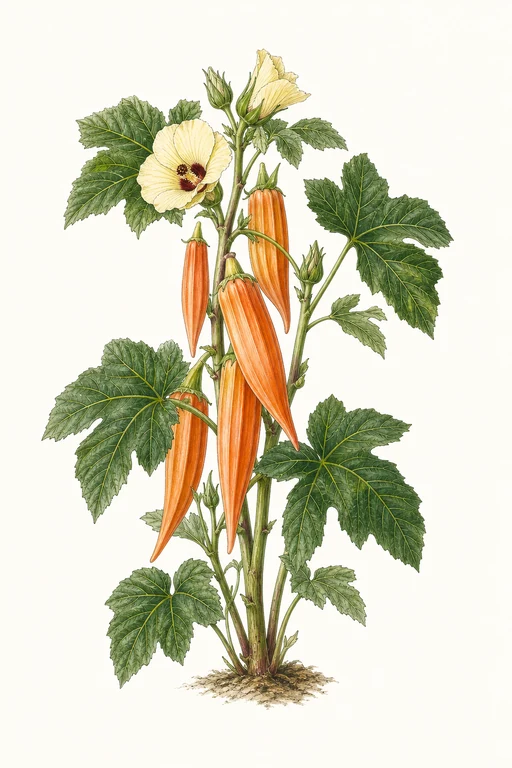
Sink your spoon into the vivid charm of Jing Orange Okra—tender pods with a bright, warm orange glow and a pleasantly crisp snap when young.
The pods are smooth and gently ribbed, offering a delicate, mildly sweet flavor that shines in fresh preparations and quick sautéing, and holds its color beautifully for pickling. A fast 55-day performer, it’s a garden favorite for gardeners who love bold color and effortless, repeat harvests.
Light: Full SunMaturity: 55 DaysHabit: Upright
Planting schedules and alerts are optimized for Columbus (Zone 6b).
Crop Dates
| Milestone | Date |
|---|---|
| Start Indoors | Mar 28th |
| Last Frost | Apr 25th |
| Transplant / Sow Outdoors | Jun 13th |
| Harvest Begins | Aug 7th |
| Harvest Ends | Oct 16th |
Crop Details
| Trait | Value |
|---|---|
| Days to Maturity | 55 |
| Sun Requirements | Full Sun |
| Growth Habit | Upright |
| Support Needed | None |
| Planting Depth | Normal |
| Germination Temp (°F) | 80 |
| Min Soil Temp (°F) | 65 |
| Min Night Temp (°F) | 55 |
| Harden Off (days) | 10 |
Culinary Notes

Chef's Note
When Jing Orange Okra is harvested young, it delivers that clean snap first and the velvet okra slip second—great for sauces that need a light cling without turning heavy. Because it pickles beautifully and stays bright, it earns its keep for tangy, vivid jarred bites as much as for fast hot-stove sautés.

Best Uses
- quick sauté with high heat so the pods keep a crisp-tender bite
- stir-fries where the mucilage lightly clings to sauce (not gummy)
- quick pickling for pods that stay vividly colored
- grilled/charred slices with a caramel edge and controlled sliminess

Flavor Profile

Frequently Asked Questions
What pest or disease most often affects okra (Abelmoschus esculentus), and how can I control it?
How often should I water Abelmoschus esculentus during the main growing phase?
How do I know when Jing Orange okra pods are ready to harvest?
Sowing Tips

Transplant Conditions
Wait until soil reaches 65°F and nights stay above 55°F before moving outdoors. Harden off for 10 days first.
Expert Note

Warm the soil well and transplant only after steady warm nights—okra is heat-loving and will sulk in cool weather.