
Jing Orange
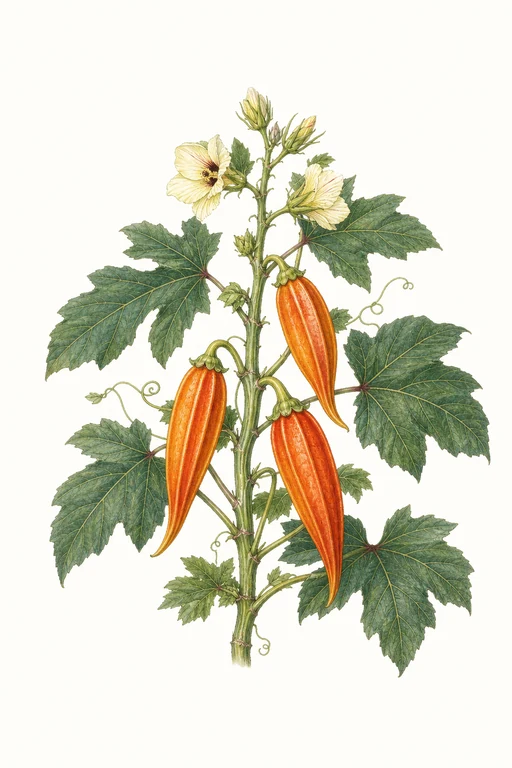
Jing Orange bursts with vivid, sunset-orange pods that feel tender and succulent at first touch, delivering a bright, garden-fresh flavor with a crisp, lightly yielding bite.
Pods are especially well suited to quick roasting and skillet searing, where their color deepens to warm amber and their texture stays pleasantly springy. Grow Jing Orange for standout harvests and showy, edible beauty in the bed—an okra you’ll reach for again and again in sauces and pickling favorites.
Light: Full SunMaturity: 55 DaysHabit: Upright
Planting schedules and alerts are optimized for Columbus (Zone 6b).
Crop Dates
| Milestone | Date |
|---|---|
| Start Indoors | Direct Sow |
| Last Frost | Apr 25th |
| Transplant / Sow Outdoors | May 9th |
| Harvest Begins | Jul 3rd |
| Harvest Ends | Oct 16th |
Crop Details
| Trait | Value |
|---|---|
| Days to Maturity | 55 |
| Sun Requirements | Full Sun |
| Growth Habit | Upright |
| Support Needed | None |
| Planting Depth | Normal |
| Germination Temp (°F) | 75 |
| Min Soil Temp (°F) | 65 |
| Min Night Temp (°F) | 55 |
| Harden Off (days) | 10 |
Culinary Notes

Chef's Note
Jing Orange okra hits with that fresh green snap, then turns plush around the seed core when heat touches it—ideal when you want both color and structure. It’s built for high-heat contact (roast or sear) and quick acid (vinegar/citrus) so you get pods that stay springy instead of collapsing into slime.

Best Uses
- quick roasting until the pods blister at the edges
- skillet searing for a springy, less-slimy texture
- stir-fries with fast-cooked aromatics to keep pods vivid
- quick pickling where the color and bite stay intact

Flavor Profile

Frequently Asked Questions
What pest or disease commonly affects Abelmoschus esculentus (okra/jing orange), and what should I do?
How often should I water Abelmoschus esculentus during its main growing phase?
How can I tell when Jing Orange (Abelmoschus esculentus) pods are ready to harvest?
Sowing Tips

Transplant Conditions
Wait until soil reaches 65°F and nights stay above 55°F before moving outdoors. Harden off for 10 days first.

Direct Sow Preferred
Sensitive roots — does not transplant well. If starting indoors, use biodegradable pots and disturb roots as little as possible when moving outdoors.
Expert Note

Sow only after consistently warm conditions (hot, humid weather is ideal for okra); thin to final spacing once seedlings are established.