
Joseph's Coat
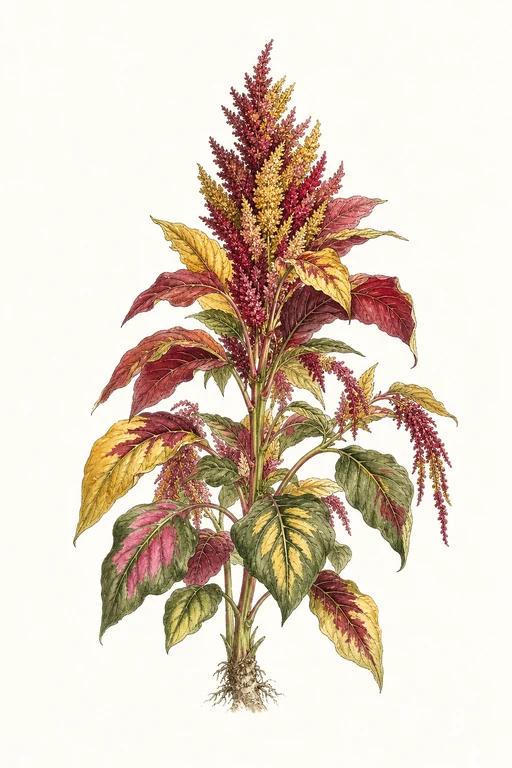
Velvety, jewel-toned leaves unfurl in a living tapestry of warm gold, rose, and deep crimson—Joseph’s Coat is a feast for the senses from the first tender harvest.
The foliage is pleasantly tender with a succulent bite and a mild, earthy sweetness that shines in fresh salads, quick sautés, and vibrant sauces. Grow it for bold color in the garden and for leafy greens that add striking beauty to every bowl.
Light: Full SunMaturity: 50 DaysHabit: Upright
Planting schedules and alerts are optimized for Columbus (Zone 6b).
Crop Dates
| Milestone | Date |
|---|---|
| Start Indoors | Apr 4th |
| Last Frost | Apr 25th |
| Transplant / Sow Outdoors | Apr 25th |
| Harvest Begins | Jun 14th |
| Harvest Ends | Oct 16th |
Crop Details
| Trait | Value |
|---|---|
| Days to Maturity | 50 |
| Sun Requirements | Full Sun |
| Growth Habit | Upright |
| Support Needed | None |
| Planting Depth | Normal |
| Germination Temp (°F) | 70 |
| Min Soil Temp (°F) | 60 |
| Min Night Temp (°F) | 40 |
| Harden Off (days) | 5 |
Culinary Notes

Chef's Note
Joseph’s Coat amaranth gives you tender, succulent greens with a gentle earthy sweetness—more “lush vegetable” than bitter leaf. It wilts fast and stays pleasantly unstringy, so it’s at its best when you treat it like spinach speed: quick heat, bright fat, and acid to keep the color and bite vivid.

Best Uses
- raw salad with citrus vinaigrette—keeps its jewel-color and snaps
- quick sauté in hot oil/garlic for 30–60 seconds so it stays glossy and not watery
- wilt into sauces where it melts into the background—especially creamy or cheesy preparations
- stir into warm grain bowls as a last-minute fold for color and fresh-herb aroma

Flavor Profile

Frequently Asked Questions
What pest or disease commonly affects Amaranthus cruentus (Joseph’s Coat), and how can I control it?
How often should I water Joseph’s Coat (Amaranthus cruentus) during active growth?
How do I know when Joseph’s Coat (Amaranthus cruentus) is ready to harvest?
Sowing Tips

Transplant Conditions
Wait until soil reaches 60°F and nights stay above 40°F before moving outdoors. Harden off for 5 days first.
Expert Note

Sow after soil warms and keep moisture consistent until emergence; thin to strong plants for best leaf color.