
Kohlrabi
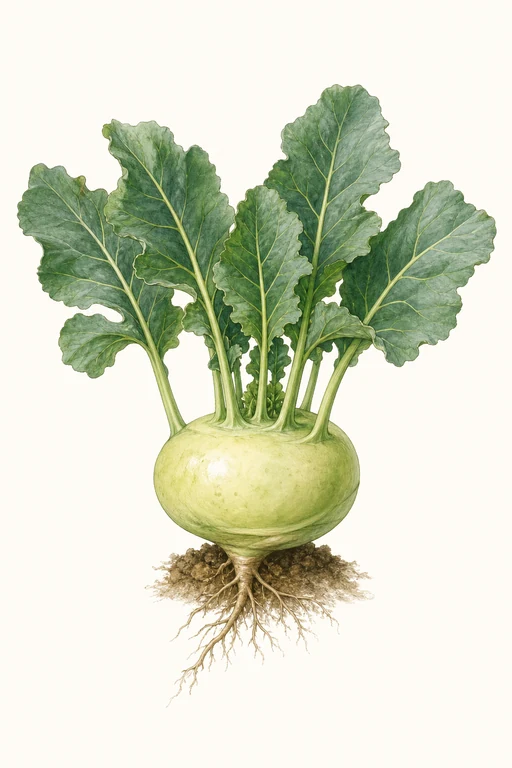
Sweetly crisp and cool as a fresh-cut spring breeze, Kohlrabi forms a smooth, globe-like bulb with a tender, juicy bite.
Its flesh stays pleasantly mild and fine-textured, making it a standout for fresh snacking, quick roasting, and bright slaws or slaw-style salads where its clean flavor shines. Grow it for a satisfying 60-day harvest window—best when the bulbs are young and the skin is at its most vibrant.
Light: Full SunMaturity: 60 DaysHabit: Rosette
Planting schedules and alerts are optimized for Columbus (Zone 6b).
Crop Dates
| Milestone | Date |
|---|---|
| Start Indoors | Mar 28th |
| Last Frost | Apr 25th |
| Transplant / Sow Outdoors | Apr 25th |
| Harvest Begins | Jun 24th |
| Harvest Ends | Oct 16th |
Crop Details
| Trait | Value |
|---|---|
| Days to Maturity | 60 |
| Sun Requirements | Full Sun |
| Growth Habit | Rosette |
| Support Needed | None |
| Planting Depth | Normal |
| Germination Temp (°F) | 45 |
| Min Soil Temp (°F) | 40 |
| Min Night Temp (°F) | 32 |
| Harden Off (days) | 6 |
Culinary Notes

Chef's Note
Kohlrabi’s sweet, fine-textured crunch makes it a rare brassica that stays pleasant when raw—shave it thin and let acid (lemon/vinegar) coat each bite without bitterness. When you roast it, the outer edges turn lightly caramel and the inside stays juicy, so it eats like a vegetable steak that loves butter and pepper.

Best Uses
- shaved or matchsticked raw in a citrusy slaw that clings to the crisp
- quick-roasted wedges brushed with butter or oil until edges caramelize
- pan-sautéed batons with garlic and a splash of vinegar
- puréed into a silky mash with olive oil and salt for a neutral, sweet base

Flavor Profile

Frequently Asked Questions
What pest or disease commonly affects Brassica oleracea (kohlrabi), and how can I control it?
How often should I water kohlrabi during the main growing phase?
How do I tell when Brassica oleracea (kohlrabi) is ready to harvest?
Sowing Tips

Transplant Conditions
Wait until soil reaches 40°F and nights stay above 32°F before moving outdoors. Harden off for 6 days first.
Expert Note

For the sweetest bulbs, keep soil evenly moist and harvest once the stems are tennis-ball sized before they get woody.