
Landis Winter
Peppery and vividly green from the first harvest, Landis Winter watercress delivers a crisp, juicy bite with a cool, bracing bite that lingers like fresh spring air.
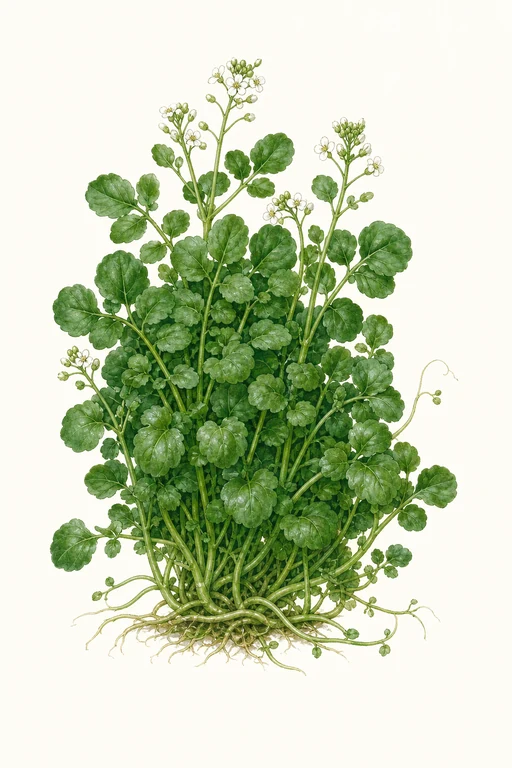
Its tender leaves form a dense, upright mat—succulent in texture, never tough—ideal for repeated snips over the season. Grow Landis Winter for bold flavor in fresh salads, bright sauces, and quick pickling, and for a resilient winter green that keeps its character when temperatures turn.
Light: Part SunMaturity: 35 DaysHabit: Clumping
Planting schedules and alerts are optimized for Columbus (Zone 6b).
Crop Dates
| Milestone | Date |
|---|---|
| Start Indoors | Direct Sow |
| Last Frost | Apr 25th |
| Transplant / Sow Outdoors | Apr 25th |
| Harvest Begins | May 30th |
| Harvest Ends | Oct 16th |
Crop Details
| Trait | Value |
|---|---|
| Days to Maturity | 35 |
| Sun Requirements | Part Sun |
| Growth Habit | Clumping |
| Support Needed | None |
| Planting Depth | Surface |
| Germination Temp (°F) | 55 |
| Min Soil Temp (°F) | 40 |
| Min Night Temp (°F) | 28 |
| Harden Off (days) | Not Required |
Culinary Notes

Chef's Note
Landis Winter watercress brings an aggressive peppery snap with juicy, non-tough leaves, so it doesn’t need cooking to taste “alive.” Use it late—on top of warm food or tossed at the last second—so the heat doesn’t blur that bracing bite.

Best Uses
- raw snip-and-sprinkle salads where it stays crisp (no wilting)
- ice-cold watercress sauce or blended herb purée for sandwiches and roasts
- quick pickling or vinegar-based relishes—keeps its snap and bite

Flavor Profile

Frequently Asked Questions
What pest or disease commonly affects Nasturtium officinale (watercress), and how can I treat it at home?
How often should I water Nasturtium officinale during the main growing phase to keep the soil moisture right?
How do I know when Nasturtium officinale is ready to harvest?
Sowing Tips

Transplant Conditions
Wait until soil reaches 40°F and nights stay above 28°F before moving outdoors.
Expert Note

For overwintering, keep watercress consistently moist (cool flowing water or constantly wet medium) and harvest often to encourage tender regrowth.