
Lockwood De Forest
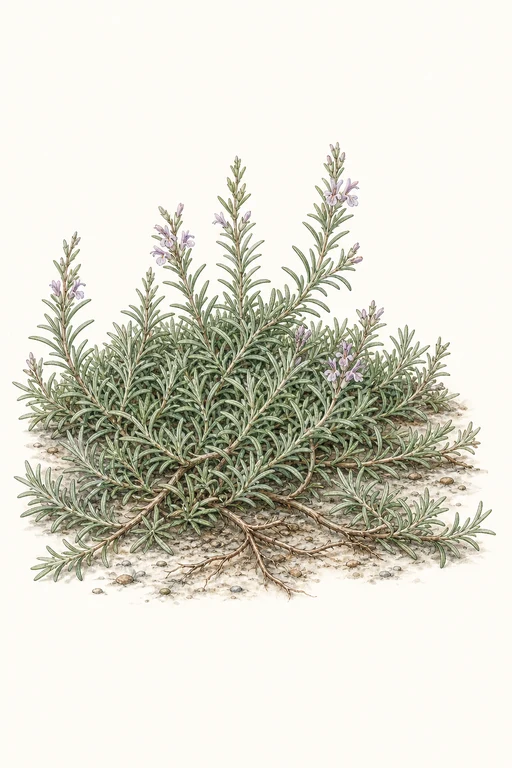
Fragrant as a sunlit hillside, Lockwood De Forest creeps with a silvery-green, resinous charm that perfumes the air when you brush past it.
Its narrow, needlelike leaves hold a bold, piney-rosemary flavor with a clean, aromatic bite—ideal for drying and for crafting deeply fragrant herb blends. Let this trailing perennial spill over edges and pathways, where its dense mat and enduring scent make it a favorite for pollinators all season long.
Light: Full SunMaturity: 120 DaysHabit: Spreading
Crop Dates : 2b
| Milestone | Date |
|---|---|
| Start Indoors | Apr 3rd |
| Last Frost | May 15th |
| Transplant / Sow Outdoors | Jun 26th |
| Harvest Begins | Oct 24th |
| Harvest Ends | Aug 25th |
Crop Details
| Trait | Value |
|---|---|
| Days to Maturity | 120 |
| Sun Requirements | Full Sun |
| Growth Habit | Spreading |
| Support Needed | None |
| Planting Depth | Normal |
| Germination Temp (°F) | 70 |
| Min Soil Temp (°F) | 60 |
| Min Night Temp (°F) | 50 |
| Harden Off (days) | 10 |
Culinary Notes

Chef's Note
Lockwood De Forest’s creeping, resin-forward needles deliver a sharply perfumed rosemary oil that doesn’t fade the moment it hits heat. Use it aggressively—crushed into fat or roasted on hot starch—so the piney bite coats everything instead of turning bitter.

Best Uses
- crush-and-rub steaks, chops, and roast poultry
- dry and grind for high-impact finishing blends
- slow-roast potatoes and root vegetables so the oils bloom
- stir into compound butter or oil for an all-over fragrance

Flavor Profile

Frequently Asked Questions
What pests or diseases commonly affect Salvia rosmarinus (Lockwood De Forest), and how can I stop them?
How often should I water Salvia rosmarinus during its main growing phase (after it establishes)?
How do I tell when Salvia rosmarinus (Lockwood De Forest) is ready to harvest?
Sowing Tips

Transplant Conditions
Wait until soil reaches 60°F and nights stay above 50°F before moving outdoors. Harden off for 10 days first.
Expert Note

Start rosemary indoors with warmth, then transplant only after nights are consistently mild and acclimate slowly to full sun.