
Longissimo di Sicilia
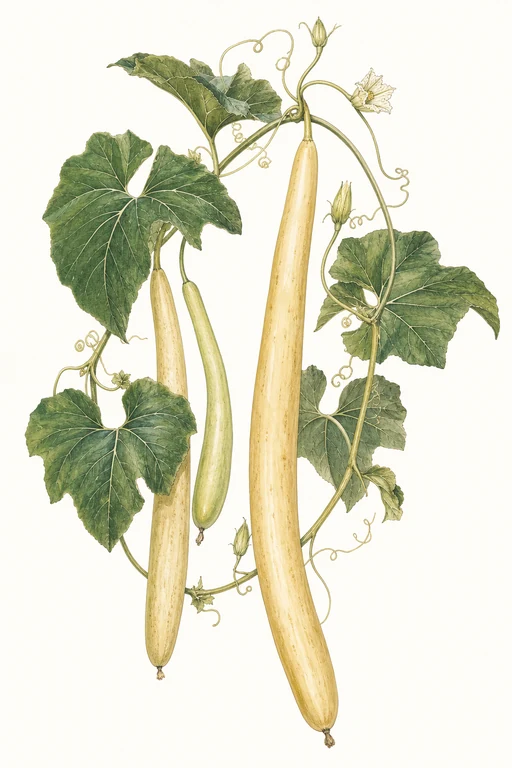
A long, elegant gourd with a quietly dramatic presence—smooth as polished ivory when young, then deepening to a mellow, sun-warmed tone as it matures.
Longissimo di Sicilia offers a tender, lightly sweet flesh and a pleasantly yielding texture that shines in fresh preparations, as well as in hearty roasted dishes and fragrant simmered sauces. An heirloom for gardeners who love to grow something both ornamental and useful, with fruits that seem to stretch forever from the vine.
Light: Full SunMaturity: 90 DaysHabit: Vine
Planting schedules and alerts are optimized for Columbus (Zone 6b).
Crop Dates
| Milestone | Date |
|---|---|
| Start Indoors | Apr 11th |
| Last Frost | Apr 25th |
| Transplant / Sow Outdoors | Apr 25th |
| Harvest Begins | Jul 24th |
| Harvest Ends | Oct 16th |
Crop Details
| Trait | Value |
|---|---|
| Days to Maturity | 90 |
| Sun Requirements | Full Sun |
| Growth Habit | Vine |
| Support Needed | Trellis |
| Planting Depth | Normal |
| Germination Temp (°F) | 75 |
| Min Soil Temp (°F) | 65 |
| Min Night Temp (°F) | 55 |
| Harden Off (days) | 10 |
Culinary Notes

Chef's Note
Longissimo di Sicilia earns its keep because the flesh stays pleasantly yielding instead of turning bland or watery—so it works both crisp-cold and hot-from-the-oven. When young it slices into elegant freshness; when mature it gives you a mellow, sun-warmed texture that melts into sauces without disappearing.

Best Uses
- thin ribbons or batons in raw/quick-pickled salads
- seared or roasted chunks that caramelize at the edges
- fragrant simmered sauces where it breaks down into a velvety body

Flavor Profile

Frequently Asked Questions
What pest or disease most commonly affects Lagenaria siceraria (Longissimo di Sicilia), and how do I control it?
How often should I water Longissimo di Sicilia during its main growing phase?
How can I tell when Longissimo di Sicilia is ready to harvest at about 90 days?
Sowing Tips

Transplant Conditions
Wait until soil reaches 65°F and nights stay above 55°F before moving outdoors. Harden off for 10 days first.

Direct Sow Preferred
Sensitive roots — does not transplant well. If starting indoors, use biodegradable pots and disturb roots as little as possible when moving outdoors.
Expert Note

For the longest, best-quality young fruits, start plants only briefly indoors (or direct sow) and keep the soil warm and evenly moist once they set flowers.