
Love Lies Bleeding
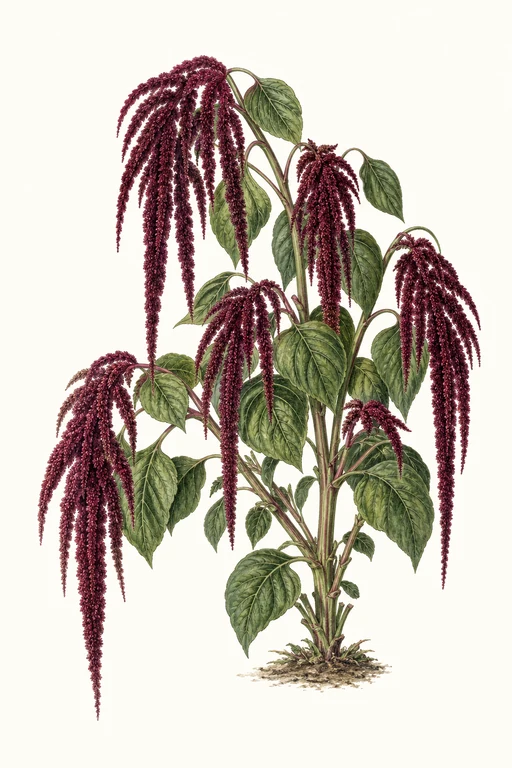
Drape your garden in a living cascade of velvet—Love Lies Bleeding produces pendulous, ribbon-like amaranth plumes that glow in deep garnet to near-black burgundy as they mature.
The flowers carry a faint, earthy sweetness and a tender, grain-like bite; their texture is delightfully soft when young and pleasantly substantial as they dry. Grow this striking annual for bold, long-lasting color in the landscape and for harvest-ready seed heads that shine in dried arrangements and rustic blends.
Light: Full SunMaturity: 90 DaysHabit: Upright
Planting schedules and alerts are optimized for Columbus (Zone 6b).
Crop Dates
| Milestone | Date |
|---|---|
| Start Indoors | Direct Sow |
| Last Frost | Apr 25th |
| Transplant / Sow Outdoors | Apr 25th |
| Harvest Begins | Jul 24th |
| Harvest Ends | Oct 16th |
Crop Details
| Trait | Value |
|---|---|
| Days to Maturity | 90 |
| Sun Requirements | Full Sun |
| Growth Habit | Upright |
| Support Needed | None |
| Planting Depth | Normal |
| Germination Temp (°F) | 70 |
| Min Soil Temp (°F) | 65 |
| Min Night Temp (°F) | 50 |
| Harden Off (days) | Not Required |
Culinary Notes

Chef's Note
These pendulous plumes are best treated like a mild, earthy-grain garnish—soft when fresh, crunchy once dried—so you get texture without overpowering the dish. Harvest bright, young heads for succulence, then dry extra for that stubborn rustic crunch that holds up on hot food only at the finish.

Best Uses
- young plumes as an edible garnish on salads and grain bowls
- dry the seed heads and use them like rustic “crunch” over yogurt, porridge, or roasted squash
- toast the seeds and fold into breads or granola for a nutty, grainy snap
- use as a visually dramatic topping for soups and stews at the end so they don’t go soggy

Flavor Profile

Frequently Asked Questions
Why are my Amaranthus caudatus (love lies bleeding) plants getting sticky spots or black sooty growth on leaves, and what can I do?
How often should I water love lies bleeding during active growth, and what soil moisture level should I maintain?
How do I tell when Amaranthus caudatus (love lies bleeding) is ready to harvest after about 90 days?
Sowing Tips

Transplant Conditions
Wait until soil reaches 65°F and nights stay above 50°F before moving outdoors.
Expert Note

Sow thinly where it will get full sun; keep evenly moist until seedlings establish, then thin for best tassel display.