
Mammoth Red Rock
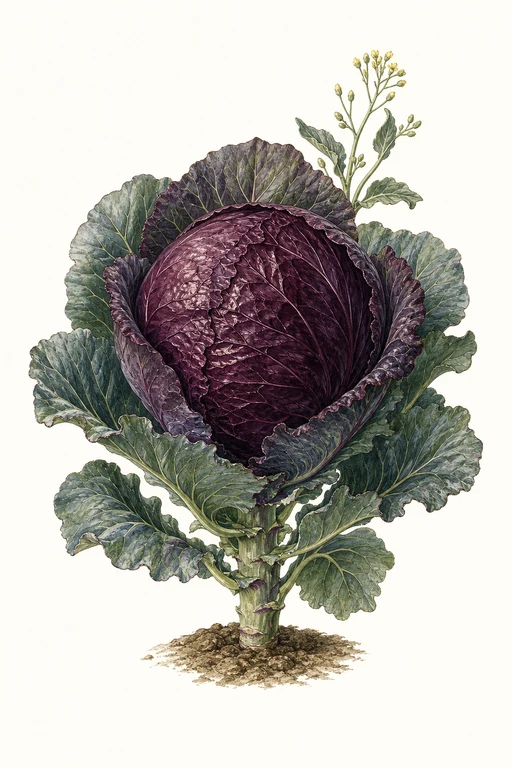
Sink your senses into Mammoth Red Rock’s richly hued heads—an inky, wine-red to deep plum that holds its color with impressive confidence.
At maturity, the cabbage forms a broad, weighty silhouette with crisp, tightly layered leaves that feel satisfyingly firm to the touch and stay resilient for slicing. Grow for bold, color-forward slaws and hearty braises, or for vibrant pickling that showcases its deep, earthy sweetness.
Light: Full SunMaturity: 85 DaysHabit: Rosette
Planting schedules and alerts are optimized for Columbus (Zone 6b).
Crop Dates
| Milestone | Date |
|---|---|
| Start Indoors | Mar 28th |
| Last Frost | Apr 25th |
| Transplant / Sow Outdoors | Apr 18th |
| Harvest Begins | Jul 12th |
| Harvest Ends | Oct 16th |
Crop Details
| Trait | Value |
|---|---|
| Days to Maturity | 85 |
| Sun Requirements | Full Sun |
| Growth Habit | Rosette |
| Support Needed | None |
| Planting Depth | Normal |
| Germination Temp (°F) | 45 |
| Min Soil Temp (°F) | 40 |
| Min Night Temp (°F) | 32 |
| Harden Off (days) | 6 |
Culinary Notes

Chef's Note
Mammoth Red Rock is built for people who want cabbage that tastes aggressive but eats clean: tight leaves, snappy bite, and a color that doesn’t ghost out when heat hits. Slice it for slaw or let it soften in fat and vinegar—this variety stays confident, not watery, and it flavors the pan fast.

Best Uses
- shredded slaw that stands up to heavy dressing without collapsing
- braises and skillet sautés where the leaves stay plump and sliceable
- deep-violet quick pickles and fermented kraut that keeps its color
- pan-seared cabbage steaks to chase caramelized edges

Flavor Profile

Frequently Asked Questions
What pest or disease most commonly affects Brassica oleracea var. capitata (cabbage), and what should I do?
How often should I water during the main growing phase of Brassica oleracea var. capitata (cabbage)?
How can I tell when Brassica oleracea var. capitata (cabbage) is ready to harvest?
Sowing Tips

Transplant Conditions
Wait until soil reaches 40°F and nights stay above 32°F before moving outdoors. Harden off for 6 days first.
Expert Note

Start indoors for a uniform head set, then transplant into cool conditions (cabbage dislikes heat) and keep moisture steady to prevent split heads.