
Marjoram Sweet Italian
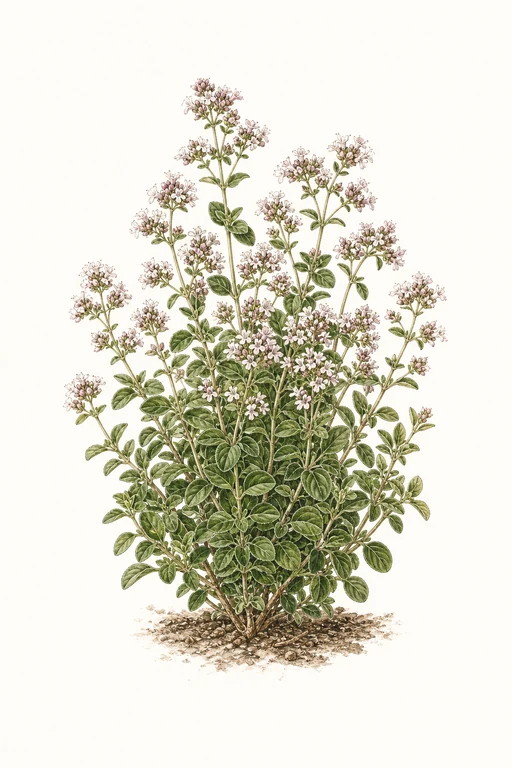
Marjoram Sweet Italian unfurls with a softly fragrant, honeyed perfume—sweetly aromatic and gently floral, with a mellow oregano character that lingers on the palate.
The foliage is tender and finely textured, forming compact, leafy mounds whose leaves hold their flavor beautifully when dried or used fresh. Grow this perennial for steady harvests and for the way its fragrant sprigs lift everyday dishes, from herb-forward sauces to savory roasts and quick pickling blends.
Light: Full SunMaturity: 75 DaysHabit: Upright
Crop Dates : 3b
| Milestone | Date |
|---|---|
| Start Indoors | May 5th |
| Last Frost | May 19th |
| Transplant / Sow Outdoors | Jun 30th |
| Harvest Begins | Sep 13th |
| Harvest Ends | Sep 21st |
Crop Details
| Trait | Value |
|---|---|
| Days to Maturity | 75 |
| Sun Requirements | Full Sun |
| Growth Habit | Upright |
| Support Needed | None |
| Planting Depth | Normal |
| Germination Temp (°F) | 70 |
| Min Soil Temp (°F) | 60 |
| Min Night Temp (°F) | 50 |
| Harden Off (days) | 10 |
Culinary Notes

Chef's Note
Sweet Italian marjoram is the oregano that behaves—less sharp, more perfumed—so it shines when you want aroma first and heat second. Use it late or fresh-finely chopped; it keeps a clean, lightly floral sweetness that doesn’t overwhelm olive oil, citrus, or creamy bases.

Best Uses
- fresh-chopped finishing over warm beans, roasted squash, or vinaigrettes
- quick pickling blends where the aromatics perfume the brine
- rubbed into poultry/lamb before roasting—add late so it doesn’t go chalky
- stirred into herb sauces and creamy dressings at the end for maximum lift
- dried for long, slow flavor in grain pilafs and stews

Flavor Profile

Frequently Asked Questions
What pest or disease most commonly affects Origanum majorana (sweet marjoram), and how can I manage it?
How often should I water sweet marjoram (Origanum majorana) during its main growing phase?
How do I know when sweet marjoram (Origanum majorana) is ready to harvest?
Sowing Tips

Transplant Conditions
Wait until soil reaches 60°F and nights stay above 50°F before moving outdoors. Harden off for 10 days first.
Expert Note

Start indoors lightly and keep seedlings warm and bright; move out only after nights stay reliably warm to prevent slow, weak growth.