
Mary Washington
Sweet, tender spears emerge with a clean, grassy fragrance and a gentle, buttery bite—Mary Washington asparagus is prized for its reliable, home-garden harvest.
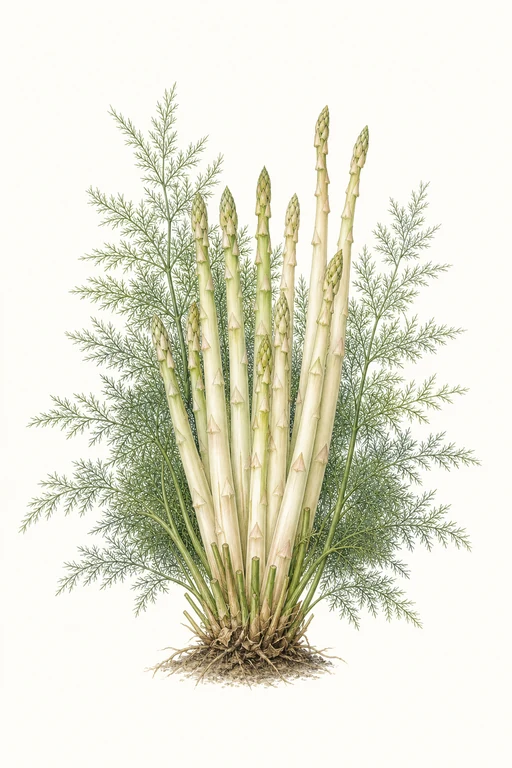
The spears are medium-thick with a graceful taper and a classic pale green to creamy hue, delivering a crisp-tender texture that holds beautifully from first rise through the season. Grow Mary Washington for elegant springtime spears that shine in fresh preparations, quick sautés, and light sauces, with enough character for pickling and preserving.
Light: Full SunMaturity: 730 DaysHabit: Perennial_Crown
Planting schedules and alerts are optimized for Columbus (Zone 6b).
Crop Dates
| Milestone | Date |
|---|---|
| Last Frost | Apr 25th |
| Growing Approach | Protected Environment Only |
Crop Details
| Trait | Value |
|---|---|
| Days to Maturity | 730 |
| Sun Requirements | Full Sun |
| Growth Habit | Perennial_Crown |
| Support Needed | None |
| Planting Depth | Normal |
| Germination Temp (°F) | 70 |
| Min Soil Temp (°F) | 50 |
| Min Night Temp (°F) | 45 |
| Harden Off (days) | Not Required |
Culinary Notes

Chef's Note
Mary Washington asparagus gives you medium-thick spears with a crisp-tender center, so it survives a fast sauté without turning stringy. It’s sweet and grassy enough to stand up to lemon and butter, while parmesan and eggs love that clean spring finish.

Best Uses
- quick hot sautés (high heat, short time) to keep the snap
- lemon-butter pan sauces that cling to medium-thick spears
- char-grill/roast then hit with flaky salt and black pepper
- quick pickle for tangy, crunchy snacking

Flavor Profile

Frequently Asked Questions
What pest or disease commonly affects Asparagus officinalis (Mary Washington), and how can I stop it?
How often should I water Mary Washington asparagus during the main growing phase (spears and fern growth)?
How do I tell when Mary Washington asparagus is ready to harvest?
Sowing Tips

Transplant Conditions
Wait until soil reaches 50°F and nights stay above 45°F before moving outdoors.
Expert Note

Start asparagus from seed or crowns, but don’t harvest spears for the first 1–2 seasons so crowns build strong root reserves.