
Meadow sage
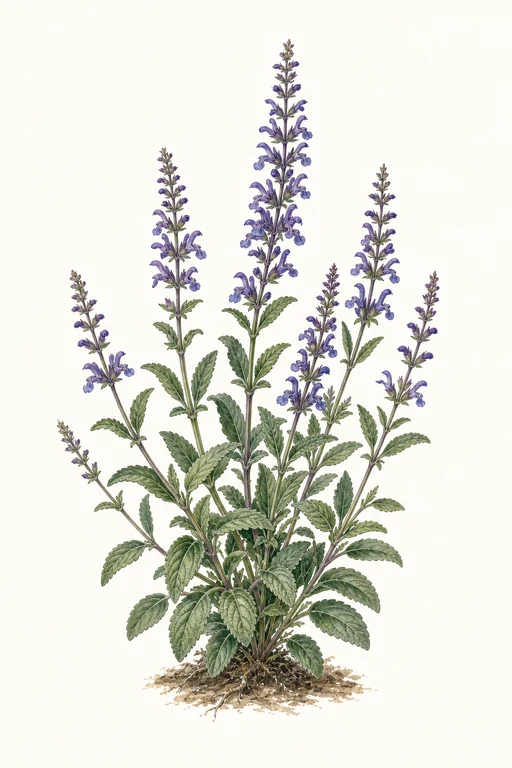
Fragrant meadow sage blooms with a soft, violet-blue haze that seems to glow above the foliage—an aromatic, nectar-rich presence that draws pollinators from the first warm spell.
Expect upright, airy flower spikes and a gently fuzzy, sage-green texture that feels as good as it looks in the garden. Ideal as a long-lived ornamental perennial, Meadow sage shines in borders and naturalistic plantings while supporting butterflies and bees throughout the season.
Light: Full SunMaturity: 90 DaysHabit: Upright
Planting schedules and alerts are optimized for Columbus (Zone 6b).
Crop Dates
| Milestone | Date |
|---|---|
| Start Indoors | Feb 28th |
| Last Frost | Apr 25th |
| Transplant / Sow Outdoors | Apr 25th |
| Harvest Begins | Jul 24th |
| Harvest Ends | Oct 16th |
Crop Details
| Trait | Value |
|---|---|
| Days to Maturity | 90 |
| Sun Requirements | Full Sun |
| Growth Habit | Upright |
| Support Needed | None |
| Planting Depth | Normal |
| Germination Temp (°F) | 65 |
| Min Soil Temp (°F) | 40 |
| Min Night Temp (°F) | 35 |
| Harden Off (days) | 7 |
Culinary Notes

Chef's Note
Meadow sage is edible, but it’s an assertive, aromatic herb-flower—use it like you would fresh sage: restraint wins. A brief steep or tiny garnish keeps the violet-nectar sweetness from tipping into dusty bitterness.

Best Uses
- use petals sparingly as a fragrant garnish on salads and chilled soups
- steep lightly for a floral-herbal tea or syrup (don’t overcook—can go drying)
- fold very small amounts into compound butter for a savory-sweet finish

Flavor Profile

Frequently Asked Questions
What pest or disease commonly affects Salvia pratensis (meadow sage), and how can I control it?
How often should I water Salvia pratensis during the main growing phase?
How do I know when Salvia pratensis is ready to harvest?
Sowing Tips

Transplant Conditions
Wait until soil reaches 40°F and nights stay above 35°F before moving outdoors. Harden off for 7 days first.
Expert Note

Cold-stratify seeds if starting from seed for best germination, then plant out after frost when nights are consistently mild.