
Minicoy
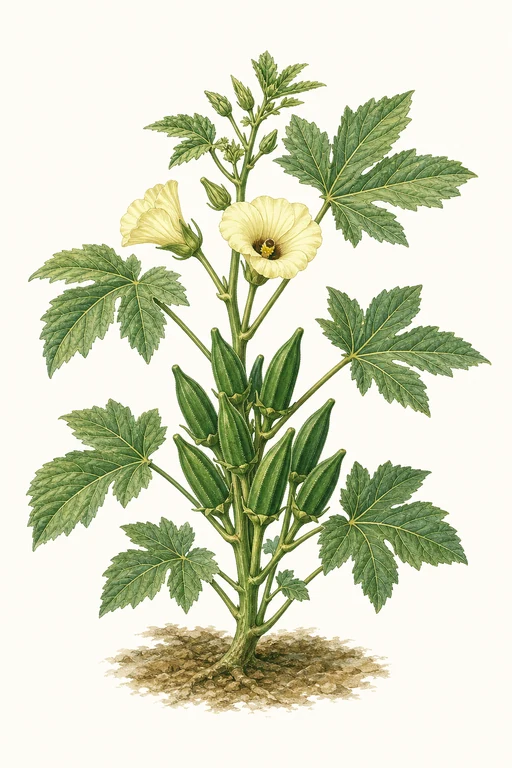
Tender pods arrive early with a vivid, garden-fresh green that feels almost velvet to the eye—Minicoy okra is prized for its compact, bite-size pods and a pleasantly mild, green-bean flavor that stays sweet and smooth.
The texture is crisp-tender at harvest, ideal for quick roasting and skillet browning, and it shines in sauces where its natural body helps create a glossy, spoonable finish. Grow Minicoy for an abundant, steady supply of petite pods that keep the harvest window lively through warm weather.
Light: Full SunMaturity: 55 DaysHabit: Upright
Planting schedules and alerts are optimized for Columbus (Zone 6b).
Crop Dates
| Milestone | Date |
|---|---|
| Start Indoors | Mar 14th |
| Last Frost | Apr 25th |
| Transplant / Sow Outdoors | Jun 20th |
| Harvest Begins | Aug 14th |
| Harvest Ends | Oct 16th |
Crop Details
| Trait | Value |
|---|---|
| Days to Maturity | 55 |
| Sun Requirements | Full Sun |
| Growth Habit | Upright |
| Support Needed | None |
| Planting Depth | Normal |
| Germination Temp (°F) | 70 |
| Min Soil Temp (°F) | 65 |
| Min Night Temp (°F) | 50 |
| Harden Off (days) | 10 |
Culinary Notes

Chef's Note
Minicoy’s petite pods stay crisp-tender, so you don’t have to cook them into submission to get flavor; they brown quickly and stay sweet. The real trick is heat—get them going hard in a pan or oven to turn their natural viscosity into a glossy, spoonable finish.

Best Uses
- quick skillet browning until edges caramelize
- roasting on a hot sheet pan for a crisp-tender exterior
- stew or curry thickening where you want a spoon-coating body
- light pickling for a snappy, bright bite

Flavor Profile

Frequently Asked Questions
What pest or disease most commonly affects okra (Abelmoschus esculentus), and how do I treat it?
How often should I water okra during the main growing phase (after it starts producing pods)?
How can I tell when okra (Abelmoschus esculentus) pods are ready to harvest?
Sowing Tips

Transplant Conditions
Wait until soil reaches 65°F and nights stay above 50°F before moving outdoors. Harden off for 10 days first.
Expert Note

Start Minicoy early for a compact high-yield crop, but transplant only once nights stay warm and the soil is at least 60°F to avoid stunting.