
Minuet
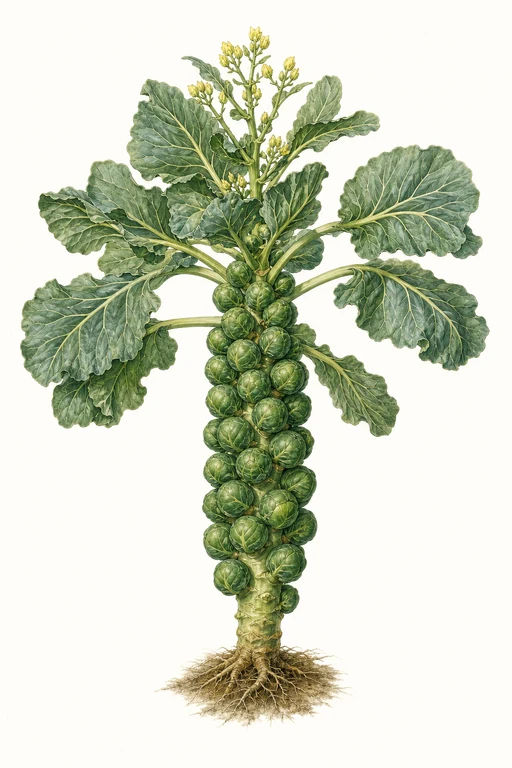
Sweet, nutty-sweet sprouts emerge in tight, jewel-like clusters—Minuet’s compact heads develop with a gentle, buttery bite and a tender, fine texture that feels especially refined.
Ideal for warm-season growing, this variety matures in about 60 days, producing uniform, small-to-medium Brussels sprouts that roast up beautifully, or shine fresh in bright, crisp preparations and quick tosses for sauces. Grow Minuet for a tidy garden presence and a harvest that tastes as polished as it looks.
Light: Full SunMaturity: 60 DaysHabit: Rosette
Planting schedules and alerts are optimized for Columbus (Zone 6b).
Crop Dates
| Milestone | Date |
|---|---|
| Start Indoors | Mar 28th |
| Last Frost | Apr 25th |
| Transplant / Sow Outdoors | Apr 18th |
| Harvest Begins | Jun 17th |
| Harvest Ends | Oct 16th |
Crop Details
| Trait | Value |
|---|---|
| Days to Maturity | 60 |
| Sun Requirements | Full Sun |
| Growth Habit | Rosette |
| Support Needed | None |
| Planting Depth | Normal |
| Germination Temp (°F) | 45 |
| Min Soil Temp (°F) | 40 |
| Min Night Temp (°F) | 32 |
| Harden Off (days) | 6 |
Culinary Notes

Chef's Note
Minuet’s tight, refined sprouts carry a sweet, nutty core and a tender chew, so they reward heat that browns the exterior without overcooking the center. Roast them hard and hot or hit them with browned butter and lemon—this is where their delicate, jewel-like sweetness really shows.

Best Uses
- high-heat roasting until edges go lacquer-brown while centers stay sweet
- steam-then-sauté for fast, tender results with browned butter sauce
- shaved or halved fresh for crisp tosses with bright vinaigrettes

Flavor Profile

Frequently Asked Questions
What pest or disease is most common on Brussels sprouts (Brassica oleracea var. gemmifera), and how do I control it?
How often should I water Brussels sprouts during the main growing phase?
How can I tell when Brussels sprouts are ready to harvest?
Sowing Tips

Transplant Conditions
Wait until soil reaches 40°F and nights stay above 32°F before moving outdoors. Harden off for 6 days first.
Expert Note

For best head development, keep plants on a steady moisture routine and avoid heat spikes (Chinese cabbage is sensitive to bolting when conditions get too warm).