
Nautic
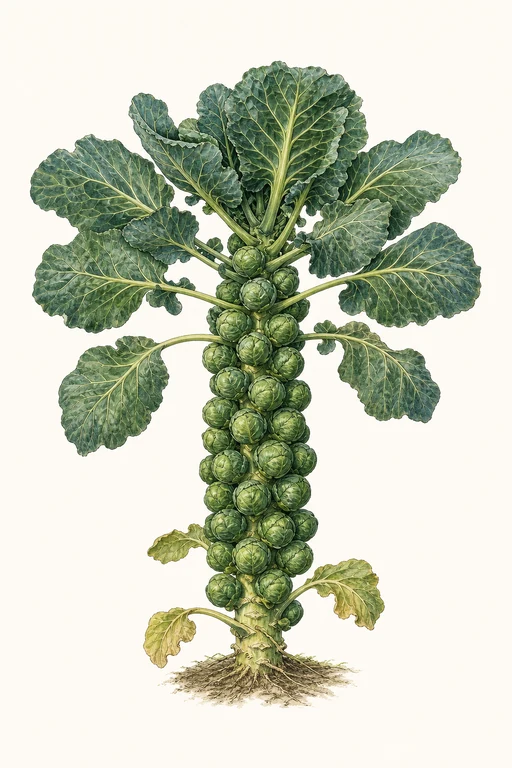
Sweetly nutty and gently peppery, Nautic Brussels sprouts develop into tight, jewel-like buttons with a tender bite and a crisp, leafy texture.
As the season cools, the heads deepen to a rich, velvety green that roasts beautifully, yet stays satisfying for fresh salads and quick skillet sautés. Ideal for gardeners who love a long harvest window—Nautic rewards patience with consistent, uniform sprouts over time.
Light: Full SunMaturity: 85 DaysHabit: Upright
Planting schedules and alerts are optimized for Columbus (Zone 6b).
Crop Dates
| Milestone | Date |
|---|---|
| Start Indoors | Mar 28th |
| Last Frost | Apr 25th |
| Transplant / Sow Outdoors | Apr 25th |
| Harvest Begins | Jul 19th |
| Harvest Ends | Oct 16th |
Crop Details
| Trait | Value |
|---|---|
| Days to Maturity | 85 |
| Sun Requirements | Full Sun |
| Growth Habit | Upright |
| Support Needed | None |
| Planting Depth | Normal |
| Germination Temp (°F) | 45 |
| Min Soil Temp (°F) | 40 |
| Min Night Temp (°F) | 32 |
| Harden Off (days) | 6 |
Culinary Notes

Chef's Note
Nautic’s tight, uniform buttons give you consistent bite—sweet-nutty flavor with a mild pepper that can handle high heat without going harsh. It roasts into a velvety green with crisp edges, and it also holds up in salads because the leaves stay snappy even after dressing.

Best Uses
- hot dry-roast or sheet-pan roasting until edges go deeply caramelized
- quick skillet sauté with a glossy finish (finish with butter/olive oil)
- shaved or halved sprouts in a cold salad—dress and let them lightly wilt at the edges
- braise to mellow the pepper and turn the interiors luxuriously soft

Flavor Profile

Frequently Asked Questions
What pest or disease problem commonly affects Brussels sprouts (Brassica oleracea var. gemmifera), and how should I respond?
How often should I water Brussels sprouts during the main growing phase (roughly the 30–70 day period)?
How can I tell when Brussels sprouts are ready to harvest?
Sowing Tips

Transplant Conditions
Wait until soil reaches 40°F and nights stay above 32°F before moving outdoors. Harden off for 6 days first.
Expert Note

For the most reliable, uniform heads, grow Brussels sprouts through cool weather and avoid letting seedlings get heat-stressed before transplanting.