
Nombo Giant
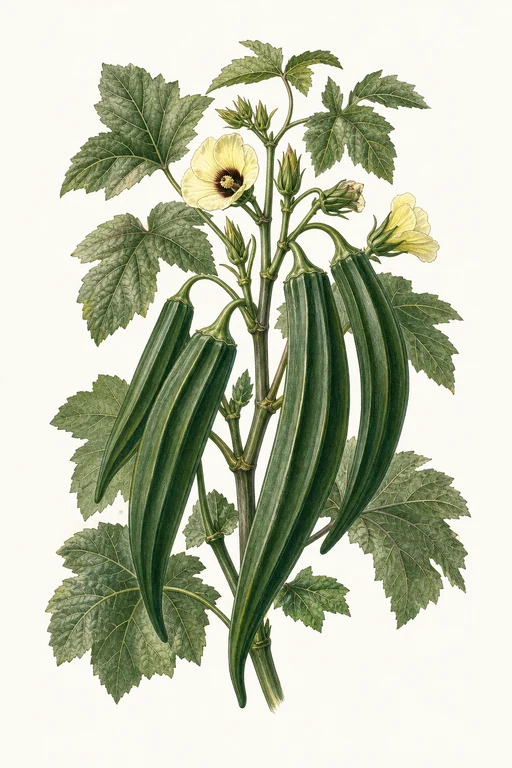
Tender, velvety pods arrive with a lush, deep-green sheen—Nombo Giant okra is prized for its impressively large, softly ribbed texture that stays pleasantly crisp when young.
The flavor is mild and green, with a fresh, garden-sweet character that shines in quick skillet roasts, hearty sauces, and vibrant pickles. Grow it for a cool-season harvest window and enjoy steady, generous pickings from week to week.
Light: Full SunMaturity: 55 DaysHabit: Upright
Planting schedules and alerts are optimized for Columbus (Zone 6b).
Crop Dates
| Milestone | Date |
|---|---|
| Start Indoors | Mar 14th |
| Last Frost | Apr 25th |
| Transplant / Sow Outdoors | Jun 20th |
| Harvest Begins | Aug 14th |
| Harvest Ends | Oct 16th |
Crop Details
| Trait | Value |
|---|---|
| Days to Maturity | 55 |
| Sun Requirements | Full Sun |
| Growth Habit | Upright |
| Support Needed | None |
| Planting Depth | Normal |
| Germination Temp (°F) | 75 |
| Min Soil Temp (°F) | 65 |
| Min Night Temp (°F) | 55 |
| Harden Off (days) | 10 |
Culinary Notes

Chef's Note
Nombo Giant’s big, softly ribbed pods give you that velvety okra mouthfeel while staying pleasantly crisp when harvested young—so it’s built for fast heat and quick texture control. Use it in sauces for silk, or pickle thicker slices to keep the bite from collapsing.

Best Uses
- quick skillet roast or blistering under high heat (aim for crisp edges, not melt-soft)
- gumbo-style or tomato-based sauces where the pod slime gives silkiness without turning gummy
- vibrant pickles—slice them thick for a sturdy crunch
- succotash-style sauté with butter and herbs for a clean, sweet-green finish

Flavor Profile

Frequently Asked Questions
What pest or disease most commonly affects Abelmoschus esculentus (okra), and how can I manage it at home?
How often should I water Abelmoschus esculentus during the main growing phase to keep pods forming well?
How do I tell when Nombo Giant okra pods are ready to harvest?
Sowing Tips

Transplant Conditions
Wait until soil reaches 65°F and nights stay above 55°F before moving outdoors. Harden off for 10 days first.
Expert Note

Warm soil is critical for okra—maximize early growth by transplanting only once nights are consistently warm and the soil is reliably hot.