
Okinawa Pink
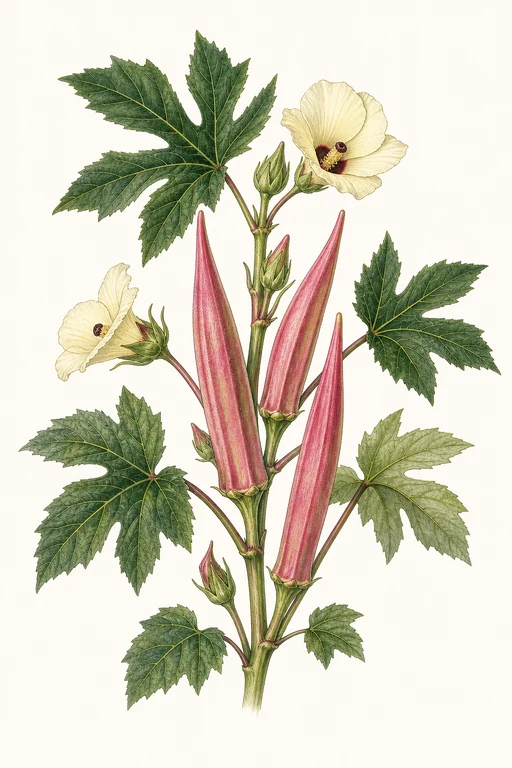
Tender pods of Okinawa Pink arrive with a captivating blush—soft pink to rosy-rose over a pale green base—then deepen in flavor as they mature.
The texture is delightfully crisp and fine-fibered, ideal for quick sautéing, roasting, and spooning into vibrant sauces; the pods also shine in pickling for a bright, rosy bite. With about 55 days to maturity, this warm-season okra brings both garden charm and a distinctive, eye-catching color to every harvest basket.
Light: Full SunMaturity: 55 DaysHabit: Upright
Planting schedules and alerts are optimized for Columbus (Zone 6b).
Crop Dates
| Milestone | Date |
|---|---|
| Start Indoors | Direct Sow |
| Last Frost | Apr 25th |
| Transplant / Sow Outdoors | Jun 20th |
| Harvest Begins | Aug 14th |
| Harvest Ends | Oct 16th |
Crop Details
| Trait | Value |
|---|---|
| Days to Maturity | 55 |
| Sun Requirements | Full Sun |
| Growth Habit | Upright |
| Support Needed | None |
| Planting Depth | Normal |
| Germination Temp (°F) | 75 |
| Min Soil Temp (°F) | 65 |
| Min Night Temp (°F) | 55 |
| Harden Off (days) | 10 |
Culinary Notes

Chef's Note
Okinawa Pink okra cooks like it was built for speed: high heat brings color and a satisfying snap before the pod gets stringy. The blush hue carries through best in tomato-chile sauces and quick pickles, where the vegetal sweetness plays perfectly with acid and heat.

Best Uses
- quick high-heat sauté or stir-fry to keep pods crisp
- roasting on a hot sheet pan for browned edges and tender centers
- spooning into a vibrant tomato-chili or herb sauce for a silky body
- quick pickling for bright, rosy tang and snappy bite

Flavor Profile

Frequently Asked Questions
How do I manage root-knot nematodes or cottony mildew-like spotting that can affect Abelmoschus esculentus (okra) like Okinawa Pink?
How often should I water Okinawa Pink okra during its main growing phase (after it starts producing)?
When is Okinawa Pink okra ready to harvest, and how do I pick it for the best texture?
Sowing Tips

Transplant Conditions
Wait until soil reaches 65°F and nights stay above 55°F before moving outdoors. Harden off for 10 days first.

Direct Sow Preferred
Sensitive roots — does not transplant well. If starting indoors, use biodegradable pots and disturb roots as little as possible when moving outdoors.
Expert Note

Treat Okinawa Pink as a true bean crop: wait for consistently warm soil and sow directly, since transplanting stresses root systems.