
Palla Rossa Early
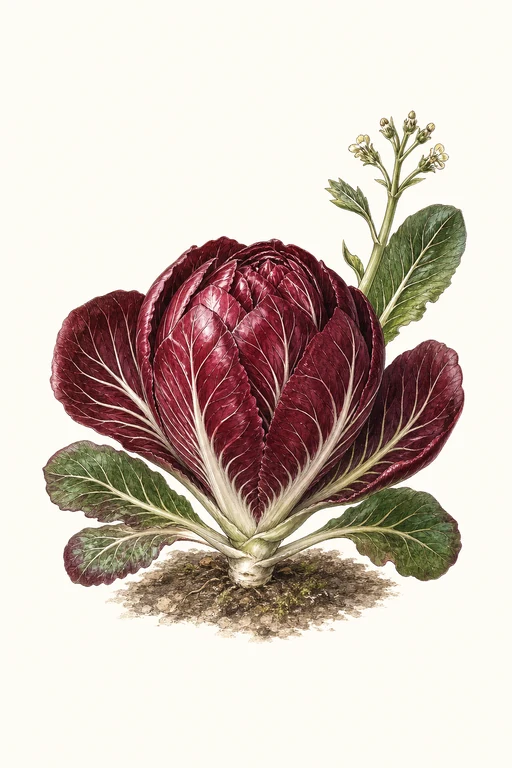
Crisp, ruby-tinged leaves unfurl with a cool, bittersweet snap—Palla Rossa Early delivers the kind of vivid color that makes a garden bed feel like a living bouquet.
At about 50 days, heads form with tight, rounded structure and a pleasantly firm texture, ideal for fresh, vibrant salads and for roasting until the edges deepen and caramel-kiss the bitterness. Let this early radicchio be your go-to for bold color in greens-forward dishes and for quick pickling-style tang that brightens every bite.
Light: Full SunMaturity: 50 DaysHabit: Rosette
Planting schedules and alerts are optimized for Columbus (Zone 6b).
Crop Dates
| Milestone | Date |
|---|---|
| Start Indoors | Direct Sow |
| Last Frost | Apr 25th |
| Transplant / Sow Outdoors | Apr 25th |
| Harvest Begins | Jun 14th |
| Harvest Ends | Oct 16th |
Crop Details
| Trait | Value |
|---|---|
| Days to Maturity | 50 |
| Sun Requirements | Full Sun |
| Growth Habit | Rosette |
| Support Needed | None |
| Planting Depth | Normal |
| Germination Temp (°F) | 45 |
| Min Soil Temp (°F) | 40 |
| Min Night Temp (°F) | 28 |
| Harden Off (days) | Not Required |
Culinary Notes

Chef's Note
Palla Rossa Early hits with a tight, crisp snap and a bittersweet edge that plays beautifully against acid—dress it aggressively and it stays structured. Roast or sear the wedges and the exterior turns caramel-kissed while the interior stays pleasantly firm, so it never goes to bitter mush.

Best Uses
- quick shaved salad with a sharp vinaigrette (it holds dressing without turning limp)
- hot pan or roast until the edges char and the bitterness caramel-sweetens
- grilled wedges drizzled with olive oil and finished with flaky salt
- quick pickling-style tang for crunchy, rubylike snacking

Flavor Profile

Frequently Asked Questions
What pest or disease most commonly affects Cichorium intybus (Palla Rossa) and how can I control it?
How often should I water Cichorium intybus during its main 50-day growing period?
How do I know when Palla Rossa (Cichorium intybus) is ready to harvest?
Sowing Tips

Transplant Conditions
Wait until soil reaches 40°F and nights stay above 28°F before moving outdoors.
Expert Note

For the mildest flavor, keep soil evenly moist and aim for cool growth (avoid hot spells that can increase bitterness).