
Parbhani Kranti
Velvety pods arrive in a rush—tender, deep green, and richly flavored with a bright, almost peppery snap that feels alive from the first harvest.
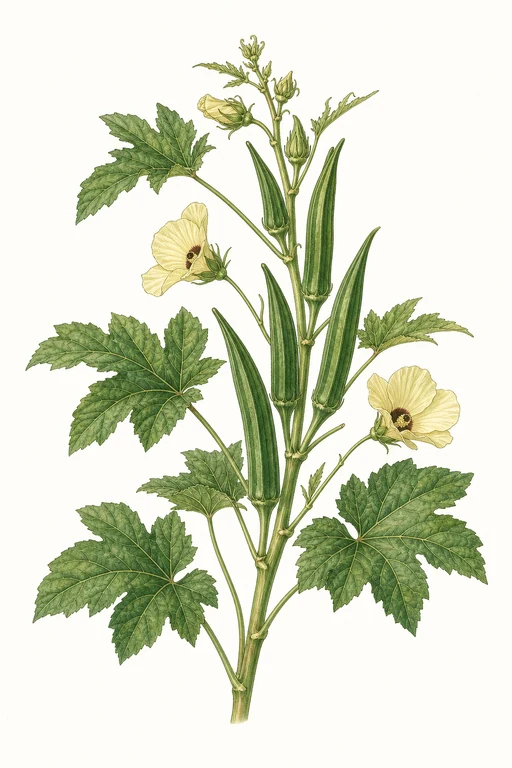
Parbhani Kranti’s slim, upright okra grows with a steady hand, producing crisp pods that stay pleasantly supple for fresh use and shine in roasting and quick skillet-style preparations, as well as in thickening sauces and pickles. An heirloom for warm-season gardeners who want both beauty in the patch and bold, garden-fresh flavor on the table.
Light: Full SunMaturity: 55 DaysHabit: Upright
Planting schedules and alerts are optimized for Columbus (Zone 6b).
Crop Dates
| Milestone | Date |
|---|---|
| Start Indoors | Direct Sow |
| Last Frost | Apr 25th |
| Transplant / Sow Outdoors | May 16th |
| Harvest Begins | Jul 10th |
| Harvest Ends | Oct 16th |
Crop Details
| Trait | Value |
|---|---|
| Days to Maturity | 55 |
| Sun Requirements | Full Sun |
| Growth Habit | Upright |
| Support Needed | None |
| Planting Depth | Normal |
| Germination Temp (°F) | 80 |
| Min Soil Temp (°F) | 65 |
| Min Night Temp (°F) | 55 |
| Harden Off (days) | 10 |
Culinary Notes

Chef's Note
Parbhani Kranti is built for that moment when okra goes from crisp snap to silky-thick—its slime reduces into a glossy coating instead of greasy strings. Slice and high-heat cook it fast, or let it go to work in a reduction so the pods thicken sauces while keeping a lively, peppery edge.

Best Uses
- hot skillet or roast—cook fast to keep pods crisp-tender and avoid dull mush
- gumbo- and stew-thickening runs—let it reduce so the mucilage turns glossy, not stringy
- quick-pickle slices for crunchy, briny snap
- griddle/charred okra with a squeeze of citrus to sharpen the vegetal notes

Flavor Profile

Frequently Asked Questions
What pest or disease most commonly affects Abelmoschus esculentus (okra), and what should I do?
How often should I water Abelmoschus esculentus during the main growing phase?
How can I tell when Abelmoschus esculentus is ready to harvest?
Sowing Tips

Transplant Conditions
Wait until soil reaches 65°F and nights stay above 55°F before moving outdoors. Harden off for 10 days first.

Direct Sow Preferred
Sensitive roots — does not transplant well. If starting indoors, use biodegradable pots and disturb roots as little as possible when moving outdoors.
Expert Note

Start indoors 7 weeks before the last spring frost for strong, cold-hardened transplants, then wait until soil is reliably warm (about 60°F+) to reduce stress and support early disease management.