
Patisson Panache Blanc Et Vert
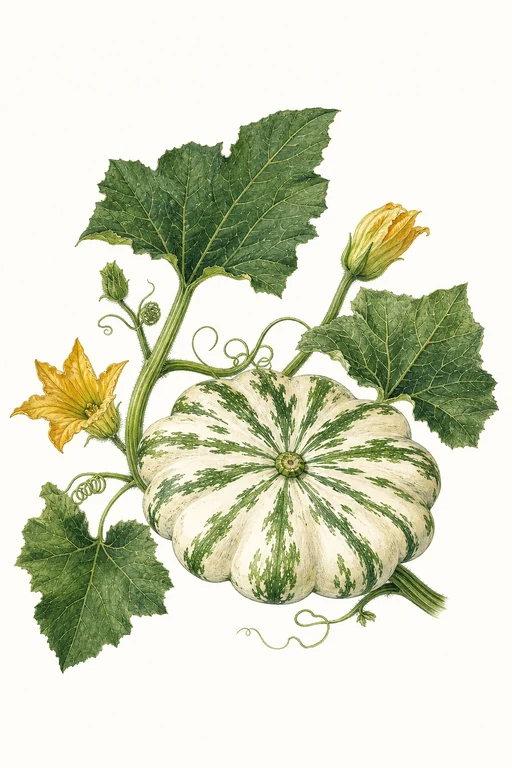
Silken, pale flesh cradles a crisp, tender bite in Patisson Panache Blanc Et Vert—summer squash with a luminous white body delicately banded in fresh green.
Its shallow, scalloped form holds a refined texture that stays pleasantly delicate from garden to table, ideal for quick roasting, sautéing, and charming fresh slices. Grow it for showy harvests and for versatile pan-ready flavor that shines in sauces and pickling brines alike.
Light: Full SunMaturity: 50 DaysHabit: Vine
Planting schedules and alerts are optimized for Columbus (Zone 6b).
Crop Dates
| Milestone | Date |
|---|---|
| Start Indoors | May 9th |
| Last Frost | Apr 25th |
| Transplant / Sow Outdoors | May 23rd |
| Harvest Begins | Jul 12th |
| Harvest Ends | Oct 16th |
Crop Details
| Trait | Value |
|---|---|
| Days to Maturity | 50 |
| Sun Requirements | Full Sun |
| Growth Habit | Vine |
| Support Needed | Trellis |
| Planting Depth | Normal |
| Germination Temp (°F) | 70 |
| Min Soil Temp (°F) | 65 |
| Min Night Temp (°F) | 55 |
| Harden Off (days) | 10 |
Culinary Notes

Chef's Note
A patty-pan squash built for speed: it gives you that crisp-tender exterior and then turns satin-soft without collapsing. Slice it raw for a clean green crunch or cook it hot and fast so the surface caramelizes while the interior stays delicate.

Best Uses
- quick sauté—cook just until the edges bronze so it stays tender, not mushy
- shallow roast at high heat for caramelized spots while keeping the center silken
- baton-slice raw for a chilled crunch with bright dressing
- quick pickling in a snappy brine for scalloped, bite-friendly slices

Flavor Profile

Frequently Asked Questions
What pest or disease most commonly affects Cucurbita pepo (patisson) and what should I do if I see it?
How often should I water Cucurbita pepo during the main growing phase to keep fruiting steady?
How can I tell when to harvest patisson (Cucurbita pepo) for best eating quality?
Sowing Tips

Transplant Conditions
Wait until soil reaches 65°F and nights stay above 55°F before moving outdoors. Harden off for 10 days first.

Direct Sow Preferred
Sensitive roots — does not transplant well. If starting indoors, use biodegradable pots and disturb roots as little as possible when moving outdoors.
Expert Note

Start seedlings in biodegradable containers (or direct sow) and transplant only once soils are warm to avoid chilling and root shock—then keep evenly watered for best tender fruit.