
Pineapple Artichoke
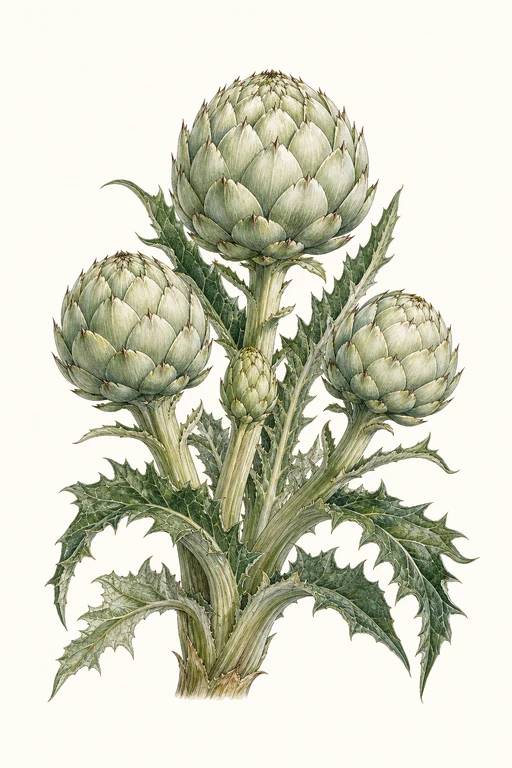
Sun-warmed globes of Pineapple Artichoke arrive with a regal, pineapple-like flair—tight, meaty hearts wrapped in thick, silvery-green bracts that feel satisfyingly firm at first touch.
The flavor is richly nutty and gently sweet, with a distinctive, artichoke-deep savor that shines in classic globe preparations and elegant sauces. Grow this long-season beauty for a dependable perennial harvest, building clumps of architectural plants that reward patience with bold, showy buds.
Light: Full SunMaturity: 150 DaysHabit: Clumping
Planting schedules and alerts are optimized for Columbus (Zone 6b).
Crop Dates
| Milestone | Date |
|---|---|
| Start Indoors | Mar 14th |
| Last Frost | Apr 25th |
| Transplant / Sow Outdoors | Jun 20th |
| Harvest Begins | Nov 17th |
| Harvest Ends | Oct 16th |
Crop Details
| Trait | Value |
|---|---|
| Days to Maturity | 150 |
| Sun Requirements | Full Sun |
| Growth Habit | Clumping |
| Support Needed | None |
| Planting Depth | Normal |
| Germination Temp (°F) | 70 |
| Min Soil Temp (°F) | 45 |
| Min Night Temp (°F) | 35 |
| Harden Off (days) | 7 |
Culinary Notes

Chef's Note
These Pineapple Artichokes bring a sturdier, meatier bite than many standard globes, so they hold shape in heat while their nutty sweetness blooms. Use lemon and a fat (butter or aioli) to tame the bracing herbal bitterness and let the hearts taste like a warm, toasted vegetable centerpiece.

Best Uses
- steam and dress hearts with lemon-garlic mayo
- slow-braise or roast until edges go bronzed and caramel-nutty
- fold into creamy gratins and pasta with Parmigiano
- whip into a silky purée for warm vinaigrettes or sheet-pan sauces

Flavor Profile

Frequently Asked Questions
What pest or disease commonly affects Cynara scolymus (artichoke), and how can I control it at home?
How often should I water Cynara scolymus during the main growing phase?
How can I tell when my Cynara scolymus is ready to harvest?
Sowing Tips

Transplant Conditions
Wait until soil reaches 45°F and nights stay above 35°F before moving outdoors. Harden off for 7 days first.
Expert Note

For best head formation, grow artichokes with consistent moisture and full sun, and in colder zones protect crowns over winter.