
Prostrata (Creeping Rosemary)
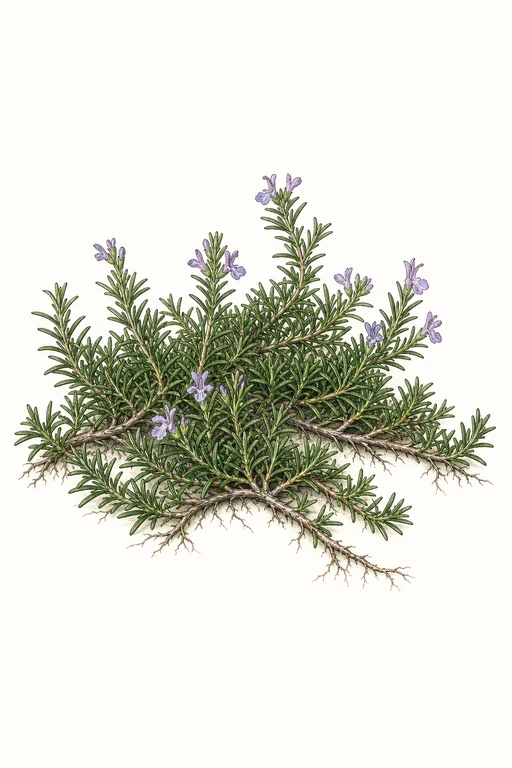
Breathe in the resinous, pine-bright fragrance that spills from Prostrata’s low, creeping mats—an aromatic evergreen that feels alive underfoot.
Its narrow needles are deep green and softly textured, releasing a vivid herbal character with every brush, making it a standout for fresh garden presence and long-lasting scent. Grow Prostrata for fragrant groundcover that shines in borders and containers, and for aromatic sprigs that elevate herb-forward preparations and infusions with its distinctive, concentrated rosemary note.
Light: Full SunMaturity: 90 DaysHabit: Spreading
Crop Dates : 5b
| Milestone | Date |
|---|---|
| Start Indoors | Apr 6th |
| Last Frost | May 4th |
| Transplant / Sow Outdoors | May 4th |
| Harvest Begins | Aug 2nd |
| Harvest Ends | Oct 5th |
Crop Details
| Trait | Value |
|---|---|
| Days to Maturity | 90 |
| Sun Requirements | Full Sun |
| Growth Habit | Spreading |
| Support Needed | None |
| Planting Depth | Normal |
| Germination Temp (°F) | 70 |
| Min Soil Temp (°F) | 60 |
| Min Night Temp (°F) | 40 |
| Harden Off (days) | 7 |
Culinary Notes

Chef's Note
Prostrata delivers a concentrated rosemary snap—great for perfume, not just flavor—so use it early for aroma or late as a fresh top-note. Keep heat and time disciplined; too much cooking pushes a bitter, resin-heavy edge that can swamp delicate proteins.

Best Uses
- quick-chop for herb-butter and compound oils
- steep for clear rosemary-infused olive oil or simple syrup
- roast into potatoes, chicken, or vegetables—add near the beginning for fragrance, then keep cooking modest
- spritz and garnish: use fresh sprigs to perfume hot grains and broths right before serving

Flavor Profile

Frequently Asked Questions
What pest or disease commonly affects Salvia rosmarinus (creeping rosemary) and how can I treat it?
How often should I water creeping rosemary (Salvia rosmarinus) during active growth?
How can I tell when Salvia rosmarinus is ready to harvest?
Sowing Tips

Transplant Conditions
Wait until soil reaches 60°F and nights stay above 40°F before moving outdoors. Harden off for 7 days first.
Expert Note

For fastest establishment, use rooted cuttings or nursery starts and plant in well-drained soil after nights are consistently mild, since rosemary dislikes cold, wet roots.