
Purple Passion
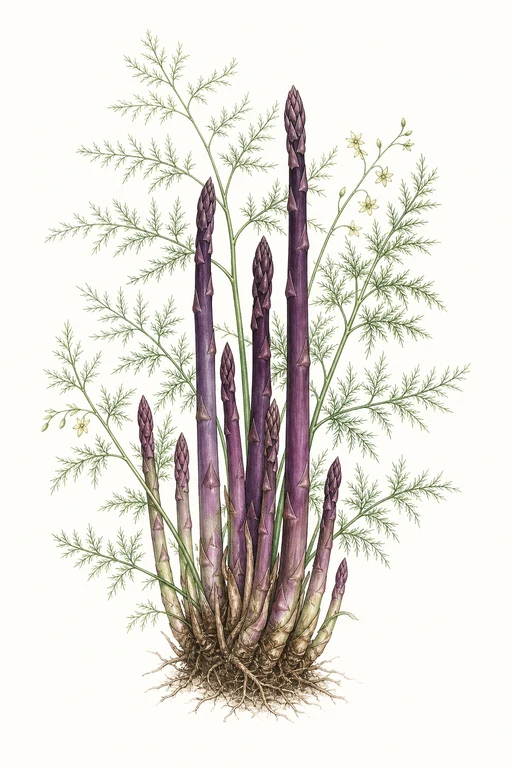
Sweetly fragrant and unmistakably vivid, Purple Passion spears emerge in a regal violet that deepens as they mature—an eye-catching harvest with a naturally tender bite.
The spears are slender and upright, offering a crisp, succulent texture that shines whether you savor them fresh or let their color glow through roasting and quick sautéing. A standout choice for gardeners who want a long-lived asparagus bed with ornamental appeal and a refined, mellow flavor for springtime tables.
Light: Full SunMaturity: 365 DaysHabit: Clumping
Planting schedules and alerts are optimized for Columbus (Zone 6b).
Crop Dates
| Milestone | Date |
|---|---|
| Last Frost | Apr 25th |
| Growing Approach | Protected Environment Only |
Crop Details
| Trait | Value |
|---|---|
| Days to Maturity | 365 |
| Sun Requirements | Full Sun |
| Growth Habit | Clumping |
| Support Needed | None |
| Planting Depth | Normal |
| Germination Temp (°F) | 70 |
| Min Soil Temp (°F) | 55 |
| Min Night Temp (°F) | 40 |
| Harden Off (days) | Not Required |
Culinary Notes

Chef's Note
Purple Passion’s slender spears deliver a sweet, mellow flavor with a crisp-tender bite—perfect for treatments where you don’t want them to go soft or fibrous. Use heat briefly (sauté/roast hot-and-fast) so the violet color and subtle aroma stay electric, then finish with lemon and butter to make the sweetness pop.

Best Uses
- quick sauté or pan-sear to keep that crisp snap
- roast hot-and-fast so the tips caramelize without turning stringy
- blanch and dress with a slick, lemony vinaigrette for a clean spring bite
- shave into ribbons for raw/half-raw salads where the color stays vivid

Flavor Profile

Frequently Asked Questions
What disease is most likely to hit purple asparagus (Asparagus officinalis), and what can I do if I see it?
How often should I water asparagus (Asparagus officinalis) during its main growing phase?
How can I tell when purple asparagus (Asparagus officinalis) is ready to harvest?
Sowing Tips

Transplant Conditions
Wait until soil reaches 55°F and nights stay above 40°F before moving outdoors.
Expert Note

If starting from seed, grow crowns for a full season before harvesting—vigorous spears come from strong roots, not early picking.