
Red Rubin Basil
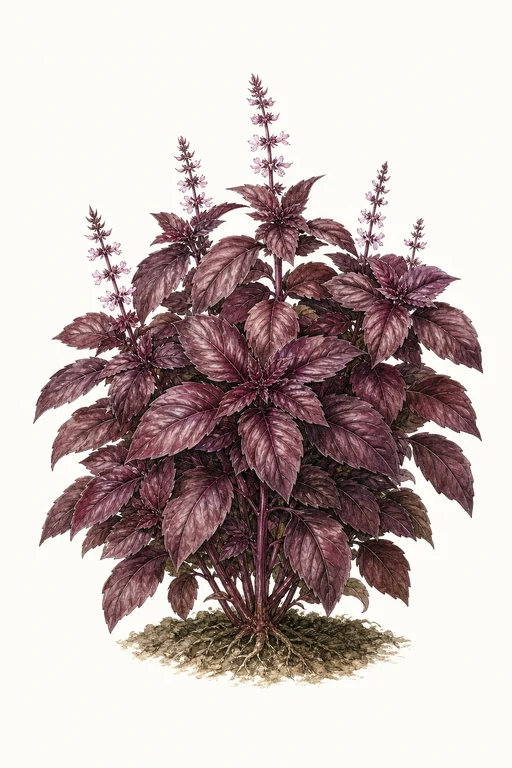
Aromatic as a summer breeze, Red Rubin Basil unfurls velvety, ruby-tinged leaves with a peppery-sweet perfume that lingers in the air.
Expect tender, medium-sized foliage with a lush, slightly ruffled texture—ideal for fresh bouquets of flavor and for turning into fragrant sauces, pesto-style blends, and quick infusions. Grow it for its striking color as much as its bold Italian basil character, with plants that hold their beauty through the warm season.
Light: Full SunMaturity: 65 DaysHabit: Upright
Crop Dates : 2a
| Milestone | Date |
|---|---|
| Start Indoors | Apr 13th |
| Last Frost | May 25th |
| Transplant / Sow Outdoors | Jul 20th |
| Harvest Begins | Sep 23rd |
| Harvest Ends | Aug 29th |
Crop Details
| Trait | Value |
|---|---|
| Days to Maturity | 65 |
| Sun Requirements | Full Sun |
| Growth Habit | Upright |
| Support Needed | None |
| Planting Depth | Normal |
| Germination Temp (°F) | 70 |
| Min Soil Temp (°F) | 60 |
| Min Night Temp (°F) | 50 |
| Harden Off (days) | 10 |
Culinary Notes

Chef's Note
Red Rubin holds onto that distinct Italian basil snap—peppery on entry, sweet on the back—so it earns its keep in anything you only heat briefly. Use it at the end or in cold blends so the ruby aroma stays intact, not muted into green-water soup.

Best Uses
- fresh torn-leaf salads where it won’t bruise into bitterness
- classic pesto-style blends (more perfume than chunky greens)
- quick pan-finish for chicken, shrimp, or blistered bread
- vinegar or oil infusions for a fast, fragrant red-leaf tint

Flavor Profile

Frequently Asked Questions
How do I prevent and treat downy mildew or botrytis on Ocimum basilicum (Red Rubin basil)?
How often should I water Ocimum basilicum during the main growing phase (around weeks 3–10)?
When is Red Rubin basil (Ocimum basilicum) ready to harvest?
Sowing Tips

Transplant Conditions
Wait until soil reaches 60°F and nights stay above 50°F before moving outdoors. Harden off for 10 days first.
Expert Note

Start indoors early enough for robust plants, then transplant only after warm nights to avoid purple basil dropping leaves.