
Red Rubin
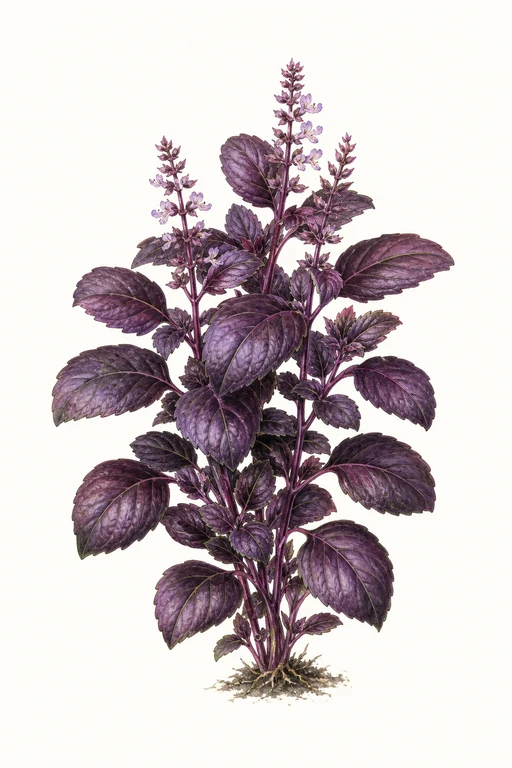
Plunge your senses into Red Rubin’s richly hued foliage—deep wine-purple leaves edged with a cool, velvety sheen that perfumes the air with a bright, sweet basil aroma.
The leaves are tender and finely textured, building a lush, upright habit that stays flavorful through the season. Grow Red Rubin for striking fresh garnishes and vibrant color in herb-forward sauces, pesto-style blends, and quick pickling infusions.
Light: Full SunMaturity: 60 DaysHabit: Upright
Location not set yet
Location not set yet
Enter your ZIP for local crop dates
Red Rubin Planting Dates by USDA Zone
Estimated US hardiness-zone windows for sow, transplant, and harvest. Enter a US ZIP above for exact local dates, or open a zone below.
| Zone | Start Indoors | Sow / Transplant | Harvest |
|---|---|---|---|
| Zone 1a | Protected Environment Only | ||
| Zone 1b | Apr 20th | Jul 27th | Sep 25th – Aug 1st |
| Zone 2a | Apr 13th | Jul 20th | Sep 18th – Aug 29th |
| Zone 2b | Apr 3rd | Jul 10th | Sep 8th – Aug 25th |
| Zone 3a | Apr 3rd | Jul 10th | Sep 8th – Sep 1st |
| Zone 3b | Apr 7th | Jul 14th | Sep 12th – Sep 21st |
| Zone 4a | Apr 3rd | Jul 10th | Sep 8th – Sep 24th |
| Zone 4b | Apr 1st | Jul 8th | Sep 6th – Sep 27th |
| Zone 5a | Mar 27th | Jul 3rd | Sep 1st – Sep 30th |
| Zone 5b | Mar 23rd | Jun 29th | Aug 28th – Oct 5th |
| Zone 6a | Mar 20th | Jun 26th | Aug 25th – Oct 10th |
| Zone 6b | Mar 14th | Jun 20th | Aug 19th – Oct 16th |
| Zone 7a | Mar 9th | Jun 15th | Aug 14th – Oct 20th |
| Zone 7b | Feb 27th | Jun 5th | Aug 4th – Oct 28th |
| Zone 8a | Feb 18th | May 27th | Jul 26th – Nov 5th |
| Zone 8b | Feb 9th | May 18th | Jul 17th – Nov 12th |
| Zone 9a | Jan 23rd | May 1st | Jun 30th – Nov 26th |
| Zone 9b | Dec 29th | Apr 6th | Jun 5th – Dec 9th |
| Zone 10a | — | Oct 1st | Nov 30th – Feb 28th |
| Zone 10b | — | Oct 1st | Nov 30th – Feb 28th |
| Zone 11a | — | Oct 1st | Nov 30th – Feb 28th |
| Zone 11b | — | Oct 1st | Nov 30th – Feb 28th |
| Zone 12a | — | Oct 1st | Nov 30th – Feb 28th |
| Zone 12b | — | Oct 1st | Nov 30th – Feb 28th |
| Zone 13a | — | Oct 1st | Nov 30th – Feb 28th |
| Zone 13b | — | Oct 1st | Nov 30th – Feb 28th |
Crop Details
| Trait | Value |
|---|---|
| Days to Maturity | 60 |
| Sun Requirements | Full Sun |
| Growth Habit | Upright |
| Support Needed | None |
| Planting Depth | Normal |
| Germination Temp (°F) | 70 |
| Min Soil Temp (°F) | 60 |
| Min Night Temp (°F) | 50 |
| Harden Off (days) | 10 |
Culinary Notes

Chef's Note
Red Rubin’s purple leaves bring a sweet basil perfume with tender, finely shredded texture—perfect for pesto where you want aroma intact rather than cooked down to muteness. Use it at the end or in fast blends: heat softens the bite and you’ll lose some of that fresh, almost cooling herb top-notes.

Best Uses
- quick pesto-style blends where you want color and aroma up front
- tear-and-fold herb finish on hot pasta or beans—minimal heat so it doesn’t dull
- vinegar quick-pickling infusions for a perfumed, lightly herbal tang
- plating garnishes that stand up to acidic salsas and olive-oil dressings

Flavor Profile

Frequently Asked Questions
What pest or disease most commonly affects Ocimum basilicum (Red Rubin basil), and what should I do?
How often should I water Ocimum basilicum during the main growing phase?
How can I tell when Red Rubin basil is ready to harvest?
Sowing Tips

Transplant Conditions
Wait until soil reaches 60°F and nights stay above 50°F before moving outdoors. Harden off for 10 days first.
Expert Note

To keep the deepest purple color, grow it in cool weather and avoid letting seedlings get rootbound before transplanting.