
Red Tails
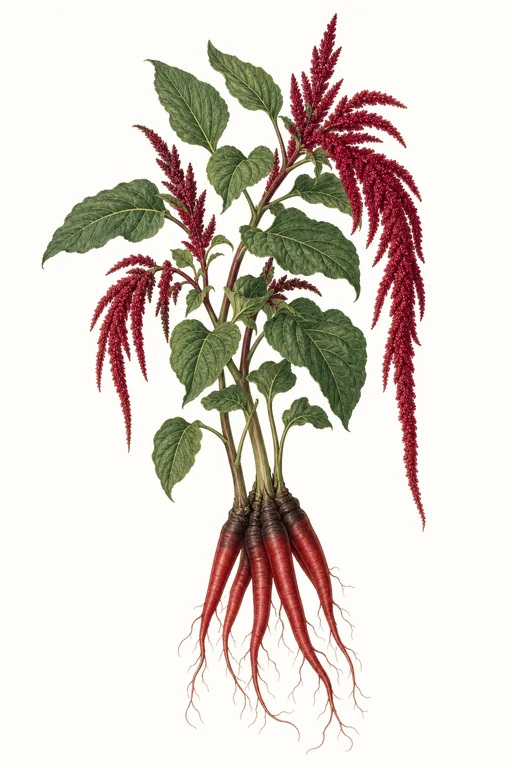
Velvety, deep garnet-red roots—nearly black at the crown—rise with a dramatic, sculptural presence and a sweet, earthy flavor that feels both tender and richly grounded.
At maturity (about 55 days), Red Tails forms smooth, tapered roots with a fine-grained bite, ideal for roasting until caramel-kissed at the edges and for turning into vibrant, spoonable purées and hearty sauces. Grow this striking amaranth for a harvest that’s as beautiful on the plate as it is satisfying in the garden.
Light: Full SunMaturity: 55 DaysHabit: Upright
Planting schedules and alerts are optimized for Columbus (Zone 6b).
Crop Dates
| Milestone | Date |
|---|---|
| Start Indoors | Direct Sow |
| Last Frost | Apr 25th |
| Transplant / Sow Outdoors | Apr 25th |
| Harvest Begins | Jun 19th |
| Harvest Ends | Oct 16th |
Crop Details
| Trait | Value |
|---|---|
| Days to Maturity | 55 |
| Sun Requirements | Full Sun |
| Growth Habit | Upright |
| Support Needed | None |
| Planting Depth | Normal |
| Germination Temp (°F) | 75 |
| Min Soil Temp (°F) | 65 |
| Min Night Temp (°F) | 50 |
| Harden Off (days) | Not Required |
Culinary Notes

Chef's Note
Red Tails amaranth has a refined, fine-grained bite that turns creamy at the edges when roasted—no need for heavy sauces to make it feel luxurious. Cook it down into a glossy purée or reduction and finish with lemon and black pepper to keep the sweetness from tipping flat.

Best Uses
- roast until the tips color and the flesh turns custardy
- steam-and-mash for a spoonable, silky purée
- use as the base for a hearty, thick sauce (reduce with stock until glossy)
- grate raw for a crisp, lightly sweet accent with a gritty-smooth texture

Flavor Profile

Frequently Asked Questions
What pest or disease most often affects Amaranthus cruentus (Red Tails), and how can I control it?
How often should I water Red Tails (Amaranthus cruentus) during its main growing phase?
How do I know when Red Tails (Amaranthus cruentus) is ready to harvest?
Sowing Tips

Transplant Conditions
Wait until soil reaches 65°F and nights stay above 50°F before moving outdoors.
Expert Note

Sow once soil is warm, keep evenly moist until emergence, and thin to avoid crowding for best “tail” form.