
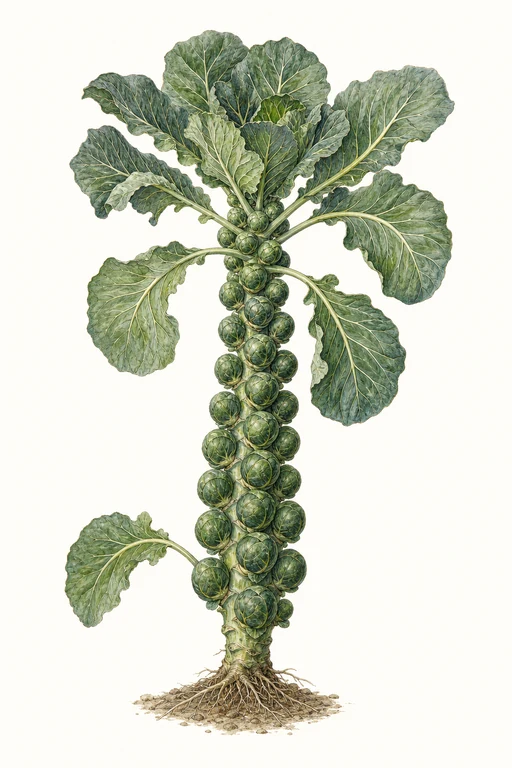
Redarling Brussels Sprout
Sweetly nutty and delicately cabbage-sweet, Redarling Brussels Sprout forms tight, jewel-like sprouts that feel wonderfully dense and tender in the hand.
At maturity, the heads are deep green with a clean, compact silhouette—ideal for roasting to bring out caramel notes, or for steaming and sautéing when you want a smooth, mellow bite. Grow Redarling for a long, dependable harvest window that turns your garden into a living harvest of crisp, flavorful greens.
Light: Full SunMaturity: 80 DaysHabit: Upright
Planting schedules and alerts are optimized for Columbus (Zone 6b).
Crop Dates
| Milestone | Date |
|---|---|
| Start Indoors | Mar 28th |
| Last Frost | Apr 25th |
| Transplant / Sow Outdoors | Apr 25th |
| Harvest Begins | Jul 14th |
| Harvest Ends | Oct 16th |
Crop Details
| Trait | Value |
|---|---|
| Days to Maturity | 80 |
| Sun Requirements | Full Sun |
| Growth Habit | Upright |
| Support Needed | None |
| Planting Depth | Normal |
| Germination Temp (°F) | 45 |
| Min Soil Temp (°F) | 40 |
| Min Night Temp (°F) | 30 |
| Harden Off (days) | 6 |
Culinary Notes

Chef's Note
These tight, dense sprouts roast like little blocks of flavor—gentle sweetness first, then proper caramel on the outside without turning harsh. They take well to butter-and-lemon brightness because the acid cuts through any lingering cabbage funk and keeps the bite snappy.

Best Uses
- hot-roast with high heat until the outer leaves blister and caramelize
- steam-then-sauté to keep sprouts mellow and glossy
- shave or halve and pan-sear for crispy edges on a sheet-pan dinner
- toss with brown butter and a squeeze of lemon while still warm

Flavor Profile

Frequently Asked Questions
What’s the most common pest or disease on Brussels sprouts (Brassica oleracea var. gemmifera) and how can I control it?
How often should I water Brussels sprouts during their main growing phase?
How do I know when Redarling Brussels sprouts are ready to harvest?
Sowing Tips

Transplant Conditions
Wait until soil reaches 40°F and nights stay above 30°F before moving outdoors. Harden off for 6 days first.
Expert Note

For the sweetest sprouts, grow through mild cool weather and let a light frost sweeten the flavor before heavy harvests.