
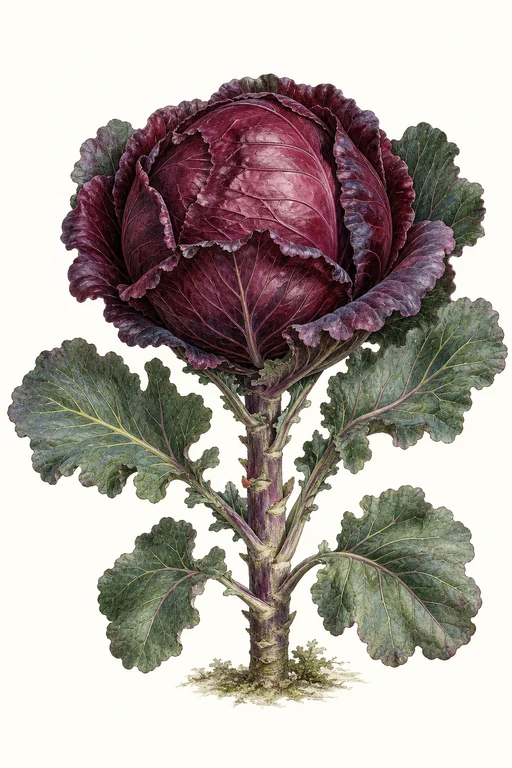
Resistant Red
Crisp, jewel-toned heads arrive with a deep, wine-red glow that deepens as the season cools—each bite promises a clean snap and a firm, tightly layered texture.
Resistant Red is bred for dependable performance in challenging weather, forming dense red cabbage heads at about 90 days that hold their color beautifully for standout slaws and vibrant braises. Grow it for bold color and satisfying crunch in every cool-season harvest window.
Light: Full SunMaturity: 90 DaysHabit: Rosette
Planting schedules and alerts are optimized for Columbus (Zone 6b).
Crop Dates
| Milestone | Date |
|---|---|
| Start Indoors | Mar 28th |
| Last Frost | Apr 25th |
| Transplant / Sow Outdoors | Apr 25th |
| Harvest Begins | Jul 24th |
| Harvest Ends | Oct 16th |
Crop Details
| Trait | Value |
|---|---|
| Days to Maturity | 90 |
| Sun Requirements | Full Sun |
| Growth Habit | Rosette |
| Support Needed | None |
| Planting Depth | Normal |
| Germination Temp (°F) | 75 |
| Min Soil Temp (°F) | 45 |
| Min Night Temp (°F) | 35 |
| Harden Off (days) | 6 |
Culinary Notes

Chef's Note
Resistant Red is built for bites that stay crisp—its dense, layered heads keep texture even when you dress, pickle, or braise. Use it when you want that clean cabbage tang to stay bright, then let heat gently round it into a winey-sweet flavor that plays perfectly with sharp mustard and fatty pork.

Best Uses
- shred into slaw that stands up to thick vinaigrettes and creamy dressings without going limp
- quick pickle or brine to keep that snap and jewel color
- braise until the outer leaves go tender while the layers stay pleasantly structured
- roast into caramelized edges where sweetness emerges and bitterness rounds off

Flavor Profile

Frequently Asked Questions
What pest or disease commonly affects Brassica oleracea var. capitata (cabbage), and how can I control it in my garden?
How often should I water Brassica oleracea var. capitata during head formation?
How do I know when Brassica oleracea var. capitata is ready to harvest?
Sowing Tips

Transplant Conditions
Wait until soil reaches 45°F and nights stay above 35°F before moving outdoors. Harden off for 6 days first.
Expert Note

Start indoors for uniform heads, then transplant only when nights are consistently warm enough to avoid slow growth and loose heads.