
Romeo
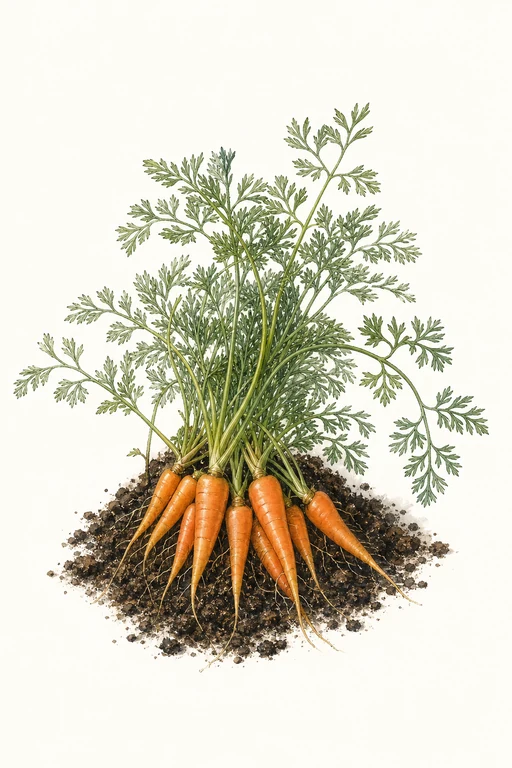
Sweet, garden-fresh crunch leads the way with Romeo baby carrots—tender and vividly sweet, with a bright, carrot-orange glow that feels almost luminous in the soil.
At maturity, the roots stay delightfully small and uniform, offering a crisp bite and a fine, juicy texture that shines in quick-roasting trays, fresh snacking, and vibrant pickling brines. Grow Romeo for a tidy harvest rhythm around day 70, when these petite roots deliver big flavor in a compact, market-ready size.
Light: Full SunMaturity: 70 DaysHabit: Taproot
Location not set yet
Location not set yet
Enter your ZIP for local crop dates
Romeo Planting Dates by USDA Zone
Estimated US hardiness-zone windows for sow, transplant, and harvest. Enter a US ZIP above for exact local dates, or open a zone below.
| Zone | Start Indoors | Sow / Transplant | Harvest |
|---|---|---|---|
| Zone 1a | Protected Environment Only | ||
| Zone 1b | Protected Environment Only | ||
| Zone 2a | Direct Sow | May 25th | Aug 3rd – Aug 29th |
| Zone 2b | Direct Sow | May 15th | Jul 24th – Aug 25th |
| Zone 3a | Direct Sow | May 15th | Jul 24th – Sep 1st |
| Zone 3b | Direct Sow | May 19th | Jul 28th – Sep 21st |
| Zone 4a | Direct Sow | May 15th | Jul 24th – Sep 24th |
| Zone 4b | Direct Sow | May 13th | Jul 22nd – Sep 27th |
| Zone 5a | Direct Sow | May 8th | Jul 17th – Sep 30th |
| Zone 5b | Direct Sow | May 4th | Jul 13th – Oct 5th |
| Zone 6a | Direct Sow | May 1st | Jul 10th – Oct 10th |
| Zone 6b | Direct Sow | Apr 25th | Jul 4th – Oct 16th |
| Zone 7a | Direct Sow | Apr 20th | Jun 29th – Oct 20th |
| Zone 7b | Direct Sow | Apr 10th | Jun 19th – Oct 28th |
| Zone 8a | Direct Sow | Apr 1st | Jun 10th – Nov 5th |
| Zone 8b | Direct Sow | Mar 23rd | Jun 1st – Nov 12th |
| Zone 9a | Direct Sow | Mar 6th | May 15th – Nov 26th |
| Zone 9b | Direct Sow | Feb 9th | Apr 20th – Dec 9th |
| Zone 10a | Continuous Production | ||
| Zone 10b | Continuous Production | ||
| Zone 11a | Continuous Production | ||
| Zone 11b | Continuous Production | ||
| Zone 12a | Continuous Production | ||
| Zone 12b | Continuous Production | ||
| Zone 13a | Continuous Production | ||
| Zone 13b | Continuous Production | ||
Crop Details
| Trait | Value |
|---|---|
| Days to Maturity | 70 |
| Sun Requirements | Full Sun |
| Growth Habit | Taproot |
| Support Needed | None |
| Planting Depth | Normal |
| Germination Temp (°F) | 75 |
| Min Soil Temp (°F) | 55 |
| Min Night Temp (°F) | 35 |
| Harden Off (days) | Not Required |
Culinary Notes

Chef's Note
Romeo baby carrots are all about that small-root concentration—sweet, juicy, and still crisp, so heat should be fast and hot to keep the bite. They love bright acids and aromatic heat; long cooking turns them into soft, watery coins instead of snappy little sticks.

Best Uses
- quick-roasting on a hot tray until the edges blister and the centers stay snappy
- fresh snacking with flaky salt and a squeeze of lemon—no dressing needed
- vibrant pickling in a hot brine for a sweet-tart, crunchy bite
- glossy glaze finish (honey-butter or maple-thyme) that clings without going mushy

Flavor Profile

Frequently Asked Questions
What pest or disease problem is most common on carrots (Daucus carota var. sativus), and how do I treat it?
How often should I water Romeo carrots during the main growing phase?
How can I tell when Romeo carrots are ready to harvest?
Sowing Tips

Transplant Conditions
Wait until soil reaches 55°F and nights stay above 35°F before moving outdoors.
Expert Note

For sweet, round baby carrots, keep the soil finely worked and evenly moist until seedlings are established—avoid letting crust form.