
Roodnerf
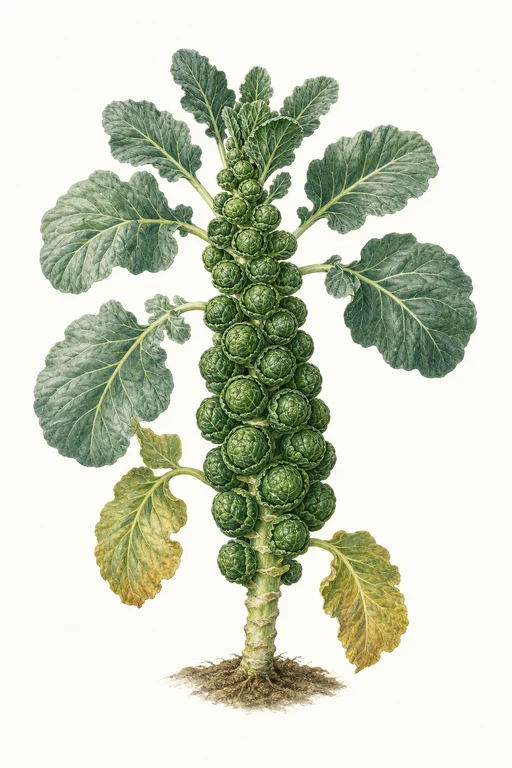
Sweetly nutty and deeply green, Roodnerf Brussels sprouts develop a tender, fine-grained bite with a gentle, savory richness that rewards patient growing.
At maturity, the compact heads stack along the stem in neat, uniform tiers—crisp to the eye, succulent in texture—ideal for roasting, steaming, and tossing into hearty skillet sides, as well as for brightening into winter salads and pickled preparations. For home gardeners, Roodnerf is a dependable, long-season favorite that turns cool weather into flavor, delivering an elegant harvest at about 85 days.
Light: Full SunMaturity: 85 DaysHabit: Upright
Planting schedules and alerts are optimized for Columbus (Zone 6b).
Crop Dates
| Milestone | Date |
|---|---|
| Start Indoors | Mar 28th |
| Last Frost | Apr 25th |
| Transplant / Sow Outdoors | May 2nd |
| Harvest Begins | Jul 26th |
| Harvest Ends | Oct 16th |
Crop Details
| Trait | Value |
|---|---|
| Days to Maturity | 85 |
| Sun Requirements | Full Sun |
| Growth Habit | Upright |
| Support Needed | None |
| Planting Depth | Normal |
| Germination Temp (°F) | 45 |
| Min Soil Temp (°F) | 45 |
| Min Night Temp (°F) | 35 |
| Harden Off (days) | 6 |
Culinary Notes

Chef's Note
Roodnerf’s tender, fine-grained sprout heads roast up glossy and succulent, with a sweet-nutty core that holds its structure better than many brassicas. Use high heat or a brief steam to keep them from going harsh, then brighten with lemon or vinegar and something salty like bacon or parmesan.

Best Uses
- roast until edges go crisp and interiors stay succulent
- steam and finish with butter or olive oil for a gentle, clean profile
- shred and toss into winter salads for crunch that doesn’t turn rubbery
- quick-pickle for a tangy, cabbagy snap

Flavor Profile

Frequently Asked Questions
What pest or disease most commonly affects Brassica oleracea var. gemmifera (Brussels sprouts), and how do I control it?
How often should I water Brassica oleracea var. gemmifera during the main growing phase?
How can I tell when Roodnerf Brussels sprouts are ready to harvest?
Sowing Tips

Transplant Conditions
Wait until soil reaches 45°F and nights stay above 35°F before moving outdoors. Harden off for 6 days first.
Expert Note

Keep seedlings cool and avoid letting them get rootbound—brussels sprouts reward steady growth in consistently cool weather.