
Rubine
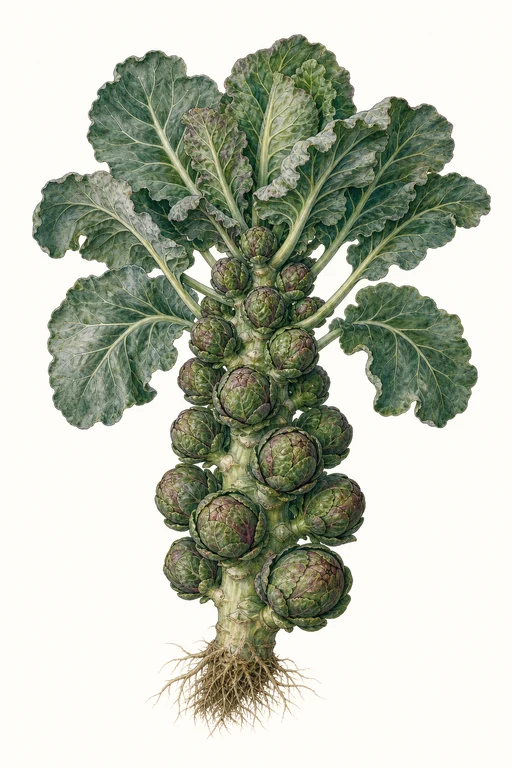
Sweetly nutty and richly green, Rubine Brussels sprouts develop into tight, jewel-like heads with a tender bite and a pleasantly mellow finish.
As the season cools, the foliage turns deep and velvety while each sprout forms a compact silhouette that roasts beautifully, shines in savory sautés, and holds its character in hearty braises. Grow Rubine for a garden-to-pan harvest that feels as refined as it tastes—bold flavor, delicate texture, and dependable performance at about 85 days.
Light: Full SunMaturity: 85 DaysHabit: Upright
Planting schedules and alerts are optimized for Columbus (Zone 6b).
Crop Dates
| Milestone | Date |
|---|---|
| Start Indoors | Mar 28th |
| Last Frost | Apr 25th |
| Transplant / Sow Outdoors | Apr 25th |
| Harvest Begins | Jul 19th |
| Harvest Ends | Oct 16th |
Crop Details
| Trait | Value |
|---|---|
| Days to Maturity | 85 |
| Sun Requirements | Full Sun |
| Growth Habit | Upright |
| Support Needed | None |
| Planting Depth | Normal |
| Germination Temp (°F) | 45 |
| Min Soil Temp (°F) | 45 |
| Min Night Temp (°F) | 35 |
| Harden Off (days) | 6 |
Culinary Notes

Chef's Note
Rubine is a Brussels that rewards heat: the tight heads roast up with caramelized edges and a tender, not-starchy interior, so they don’t fall apart in a pan. When the weather cools, its nutty sweetness and deep green mellowness make it especially good with bacon fat, garlic, and a bright hit of acid.

Best Uses
- hot roast to caramelize cut surfaces (no mush, just jewel-tender centers)
- garlic–butter or olive-oil sauté for savory, glossy sprouts
- savory braises where they hold shape and taste mellow against meat stock
- shaved or halved sprouts tossed with warm fat to coat before serving

Flavor Profile

Frequently Asked Questions
What’s a common problem for Brassica oleracea var. gemmifera (Brussels sprouts) and how do I control it if my plants start to look wilted or have holes in the leaves?
How often should I water Brussels sprouts during their main growth phase?
How can I tell when these Brussels sprouts are ready to harvest?
Sowing Tips

Transplant Conditions
Wait until soil reaches 45°F and nights stay above 35°F before moving outdoors. Harden off for 6 days first.
Expert Note

For best flavor and compact heads, keep soil evenly moist and avoid heat stress—cool conditions help Brussels sprouts size up properly.