
Ruby Streaks Mustard
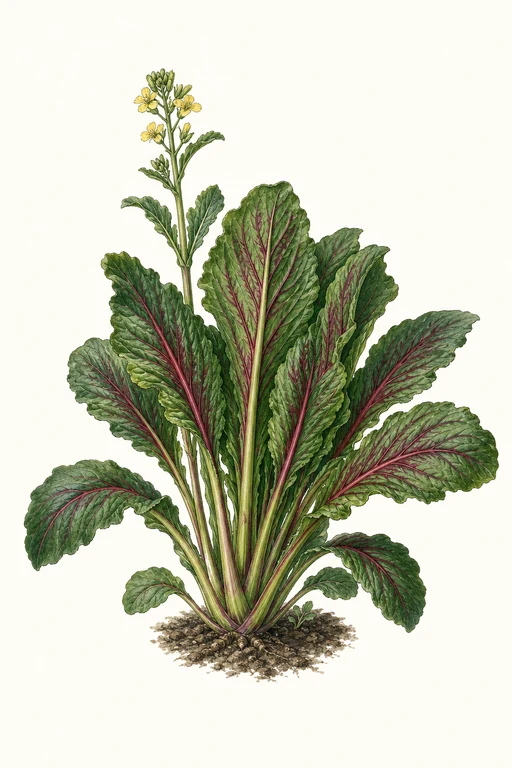
Peppery-sweet leaves unfurl with a vivid ruby blush—green blades streaked and veined in jewel-toned red that looks as lively as it tastes.
Ruby Streaks Mustard forms a tidy rosette of tender, crisp foliage with a lively bite that mellows beautifully when grown through cool weather. Ideal for fresh salads, quick sautés, and vibrant sauces, these greens add color and character to every bowl and platter.
Light: Part SunMaturity: 35 DaysHabit: Rosette
Planting schedules and alerts are optimized for Columbus (Zone 6b).
Crop Dates
| Milestone | Date |
|---|---|
| Start Indoors | Mar 28th |
| Last Frost | Apr 25th |
| Transplant / Sow Outdoors | Apr 25th |
| Harvest Begins | May 30th |
| Harvest Ends | Oct 16th |
Crop Details
| Trait | Value |
|---|---|
| Days to Maturity | 35 |
| Sun Requirements | Part Sun |
| Growth Habit | Rosette |
| Support Needed | None |
| Planting Depth | Normal |
| Germination Temp (°F) | 45 |
| Min Soil Temp (°F) | 40 |
| Min Night Temp (°F) | 30 |
| Harden Off (days) | 6 |
Culinary Notes

Chef's Note
Ruby Streaks Mustard brings a clean, peppery charge that softens into a sweet, almost silky brassica when cooked fast—perfect when you want flavor without heavy bitterness. Its red-veined intensity also holds up visually in a quick sauté, so the plate stays lively even after heat.

Best Uses
- quick sauté with butter or oil until just wilted (keep the snap at the edges)
- tossed raw in salads where the dressing is tangy and creamy to balance the heat
- blitz into a punchy green sauce or purée for pasta—use it bright, not long-cooked
- fold into soups or beans late in the simmer so it stays vivid and not gray

Flavor Profile

Frequently Asked Questions
What pest or disease most often affects Brassica rapa var. niposinica (ruby streaks mustard), and how can I control it?
How often should I water ruby streaks mustard during its main growing phase?
How do I tell when ruby streaks mustard is ready to harvest?
Sowing Tips

Transplant Conditions
Wait until soil reaches 40°F and nights stay above 30°F before moving outdoors. Harden off for 6 days first.
Expert Note

For best leaf color and flavor, grow mustard in cool weather (avoid hot spells) and harvest frequently for tender regrowth.