
Runner Bean
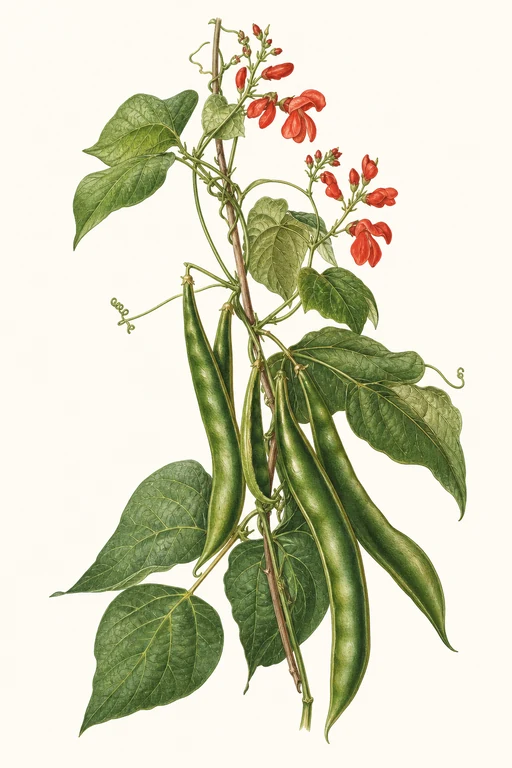
Savory-sweet and vividly fresh, Runner Bean pods arrive in a long, graceful sweep—tender at first touch, then pleasantly substantial as they mature.
Their crisp, meaty texture shines in quick roasting and stir-fries, and the rich color makes them equally beautiful in hearty sauces and vibrant pickles. A pole bean for gardeners who love an abundant, climbing harvest—grow it for steady, season-long flavor from garden trellis to table.
Light: Full SunMaturity: 70 DaysHabit: Vine
Planting schedules and alerts are optimized for Columbus (Zone 6b).
Crop Dates
| Milestone | Date |
|---|---|
| Start Indoors | Direct Sow |
| Last Frost | Apr 25th |
| Transplant / Sow Outdoors | Apr 25th |
| Harvest Begins | Jul 4th |
| Harvest Ends | Oct 16th |
Crop Details
| Trait | Value |
|---|---|
| Days to Maturity | 70 |
| Sun Requirements | Full Sun |
| Growth Habit | Vine |
| Support Needed | Trellis |
| Planting Depth | Normal |
| Germination Temp (°F) | 65 |
| Min Soil Temp (°F) | 60 |
| Min Night Temp (°F) | 50 |
| Harden Off (days) | Not Required |
Culinary Notes

Chef's Note
Runner beans are at their best when you cook them fast—roast or stir-fry just until the pods turn tender but still chew-firm, so you keep that crisp, meaty snap. Their savory-sweet profile loves salty fat (bacon/soy) and a sharp bright cut (lemon), and they pickle beautifully without turning limp.

Best Uses
- hot quick-roast with high heat until edges blister
- stir-fry with garlic and a glossy soy-garlic finish
- pickling for tangy crunch and color retention
- chop-and-fold into warm grain salads with a vinaigrette

Flavor Profile

Frequently Asked Questions
Why are my runner bean leaves getting dusty spots or turning yellow, and how can I fix it?
How often should I water runner beans during the main growing phase (when flowering and pods are forming)?
How do I know when runner beans are ready to harvest?
Sowing Tips

Transplant Conditions
Wait until soil reaches 60°F and nights stay above 50°F before moving outdoors.
Expert Note

Soak seed overnight and sow after soil and nights are warm; a strong trellis from day one prevents weak vines from tangling.