
Russet Burbank
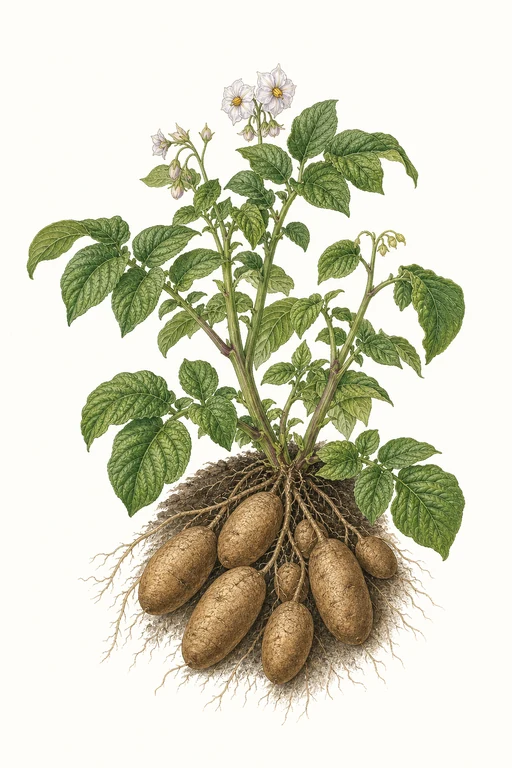
Earthy, deeply russeted skins with a warm, nutty aroma greet you from the soil—Russet Burbank delivers a classic, dependable russet profile with a fluffy, fine-grained interior.
Expect sturdy, oval tubers that roast up beautifully, turning crisp on the outside while staying tender within; they’re equally at home for hearty mashes and thick, velvety sauces. Grow this 95-day favorite for a reliable harvest that feels truly “old-fashioned” in flavor and texture.
Light: Full SunMaturity: 95 DaysHabit: Mounding
Crop Dates : 9a
| Milestone | Date |
|---|---|
| Start Indoors | Direct Sow |
| Last Frost | Mar 6th |
| Transplant / Sow Outdoors | Mar 6th |
| Harvest Begins | Jun 9th |
| Harvest Ends | Nov 26th |
Crop Details
| Trait | Value |
|---|---|
| Days to Maturity | 95 |
| Sun Requirements | Full Sun |
| Growth Habit | Mounding |
| Support Needed | None |
| Planting Depth | Normal |
| Germination Temp (°F) | 50 |
| Min Soil Temp (°F) | 45 |
| Min Night Temp (°F) | 35 |
| Harden Off (days) | Not Required |
Culinary Notes

Chef's Note
Russet Burbank’s fine-grained starch makes it whip up fluffy and airy without turning gluey, and its nutty, earthy edge carries hard through high heat. Roast or mash it with fat (butter/sour cream) and punchy aromatics, and it holds texture instead of collapsing like waxier potatoes.

Best Uses
- high-heat roasting for deep browning and creamy interiors
- old-school mashed potatoes (rinsed for starch control, then whipped hot)
- thickening base for velvety soups and chowders
- baking or pan-crisping for a fluffy center that stays steam-soft

Flavor Profile

Frequently Asked Questions
What pest or disease most often affects Solanum tuberosum (Russet Burbank potatoes), and how can I control it?
How often should I water Russet Burbank potatoes during the main growing phase (bulking tubers)?
How do I know when Russet Burbank potatoes are ready to harvest?
Sowing Tips

Transplant Conditions
Wait until soil reaches 45°F and nights stay above 35°F before moving outdoors.
Expert Note

Plant seed potatoes once soil is workable and warm enough, then hill as plants grow to keep tubers covered and prevent greening.