
Salad King
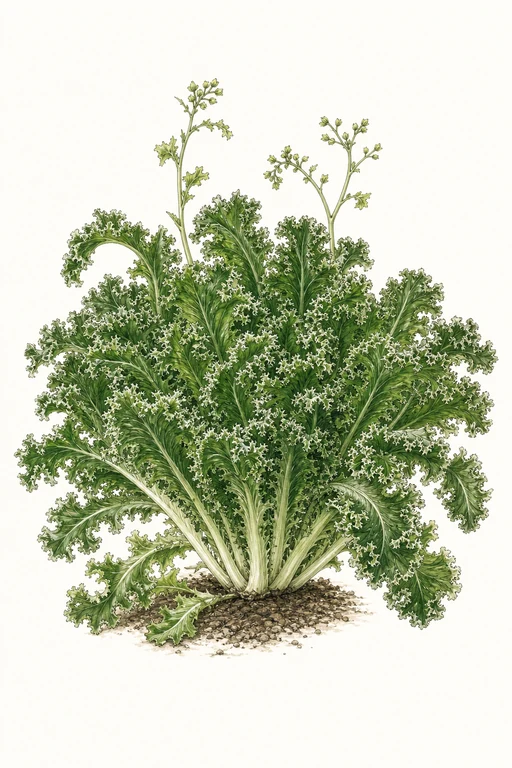
Tender, deeply curled fronds unfurl in a crisp rosette, with a clean, bright bite and a pleasantly mellow bitterness that lingers like fresh greens on the breeze.
Salad King’s leaves are richly textured—springy and finely ruffled—holding their shape beautifully for a satisfying, refreshing mouthfeel. Ideal for cool-season salads and elegant platters, this variety shines when served fresh, and it also lends its lively character to quick wilted greens and tangy pairings in savory preparations.
Light: Full SunMaturity: 55 DaysHabit: Rosette
Planting schedules and alerts are optimized for Columbus (Zone 6b).
Crop Dates
| Milestone | Date |
|---|---|
| Start Indoors | Mar 28th |
| Last Frost | Apr 25th |
| Transplant / Sow Outdoors | Apr 25th |
| Harvest Begins | Jun 19th |
| Harvest Ends | Oct 16th |
Crop Details
| Trait | Value |
|---|---|
| Days to Maturity | 55 |
| Sun Requirements | Full Sun |
| Growth Habit | Rosette |
| Support Needed | None |
| Planting Depth | Normal |
| Germination Temp (°F) | 70 |
| Min Soil Temp (°F) | 40 |
| Min Night Temp (°F) | 32 |
| Harden Off (days) | 6 |
Culinary Notes

Chef's Note
Salad King’s deeply curled fronds stay structured under dressing, so you get crunch right through the last bite instead of wilting into a wet tangle. Its mellow bitterness makes it a knockout with sharp citrus and salty cured meats—use a bracing vinaigrette to keep it lively.

Best Uses
- raw endive salads with assertive vinaigrettes
- chopped salad platters where the curls need to stay intact
- quick sauté/wilt (hot pan, short time) to soften without turning to mush
- grilled/charred endive as a bitter-sweet foil to salty fats

Flavor Profile

Frequently Asked Questions
Why are my Cichorium endivia (Salad King/Frisée-type) leaves turning brown or developing fuzzy growth, and what can I do?
How often should I water Cichorium endivia during the main growing phase (from establishment through leaf filling)?
How do I know when my Cichorium endivia (Salad King/Frisée-type) is ready to harvest?
Sowing Tips

Transplant Conditions
Wait until soil reaches 40°F and nights stay above 32°F before moving outdoors. Harden off for 6 days first.
Expert Note

For best crispness and slow bolting, keep soil evenly moist and shade plants during sudden warm spells.