
Salem
Fragrant as a sun-warmed stone wall, Salem Rosemary releases a crisp, resinous pine-citrus aroma with every touch—its flavor brightens from herbal to gently woodsy as the plant matures.
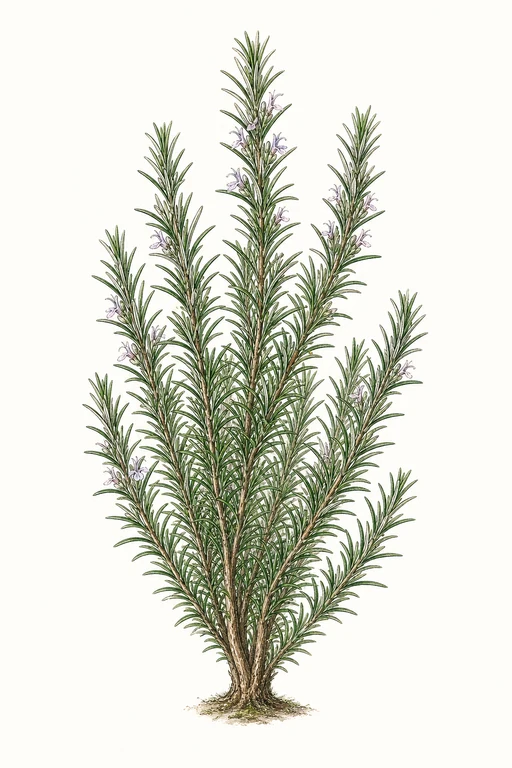
Expect narrow, needlelike leaves with a supple, leathery snap and a deep green sheen that holds its character through the season. Grow Salem for aromatic bundles, fragrant foliage for drying, and bold, steady presence in herb beds and containers—an enduring perennial that keeps your garden smelling alive.
Light: Full SunMaturity: 90 DaysHabit: Upright
Location not set yet
Location not set yet
Enter your ZIP for local crop dates
Salem Planting Dates by USDA Zone
Estimated US hardiness-zone windows for sow, transplant, and harvest. Enter a US ZIP above for exact local dates, or open a zone below.
| Zone | Start Indoors | Sow / Transplant | Harvest |
|---|---|---|---|
| Zone 1a | May 4th | Jun 8th | Sep 6th – Jul 15th |
| Zone 1b | Apr 20th | May 25th | Aug 23rd – Aug 1st |
| Zone 2a | Apr 13th | May 18th | Aug 16th – Aug 29th |
| Zone 2b | Apr 3rd | May 8th | Aug 6th – Aug 25th |
| Zone 3a | Apr 3rd | May 8th | Aug 6th – Sep 1st |
| Zone 3b | Apr 7th | May 12th | Aug 10th – Sep 21st |
| Zone 4a | Apr 3rd | May 8th | Aug 6th – Sep 24th |
| Zone 4b | Apr 1st | May 6th | Aug 4th – Sep 27th |
| Zone 5a | Mar 27th | May 1st | Jul 30th – Sep 30th |
| Zone 5b | Mar 23rd | Apr 27th | Jul 26th – Oct 5th |
| Zone 6a | Mar 20th | Apr 24th | Jul 23rd – Oct 10th |
| Zone 6b | Mar 14th | Apr 18th | Jul 17th – Oct 16th |
| Zone 7a | Mar 9th | Apr 13th | Jul 12th – Oct 20th |
| Zone 7b | Feb 27th | Apr 3rd | Jul 2nd – Oct 28th |
| Zone 8a | Feb 18th | Mar 25th | Jun 23rd – Nov 5th |
| Zone 8b | Feb 9th | Mar 16th | Jun 14th – Nov 12th |
| Zone 9a | Jan 23rd | Feb 27th | May 28th – Nov 26th |
| Zone 9b | Dec 29th | Feb 2nd | May 3rd – Dec 9th |
| Zone 10a | — | Oct 1st | Dec 30th – Feb 28th |
| Zone 10b | — | Oct 1st | Dec 30th – Feb 28th |
| Zone 11a | — | Oct 1st | Dec 30th – Feb 28th |
| Zone 11b | — | Oct 1st | Dec 30th – Feb 28th |
| Zone 12a | — | Oct 1st | Dec 30th – Feb 28th |
| Zone 12b | — | Oct 1st | Dec 30th – Feb 28th |
| Zone 13a | — | Oct 1st | Dec 30th – Feb 28th |
| Zone 13b | — | Oct 1st | Dec 30th – Feb 28th |
Crop Details
| Trait | Value |
|---|---|
| Days to Maturity | 90 |
| Sun Requirements | Full Sun |
| Growth Habit | Upright |
| Support Needed | None |
| Planting Depth | Normal |
| Germination Temp (°F) | 70 |
| Min Soil Temp (°F) | 60 |
| Min Night Temp (°F) | 50 |
| Harden Off (days) | 10 |
Culinary Notes

Chef's Note
Salem rosemary hits with a clean pine-citrus snap that holds up to heat, so it’s built for sheet-pan roasting and fat-based infusions rather than relying on delicate, raw use. Use it like a fragrance—early in the cook for body, later for lift—so it stays sharp instead of turning bitter.

Best Uses
- robust infusions for oil or butter (stays punchy, not hollow)
- dry-roasting applications—tuck into sheet-pan potatoes, root veg, or chickpeas
- quick-chop finishing in marinades where you want fragrance more than sweetness
- drying and long-simmer stews where the aroma rounds without turning flat

Flavor Profile

Frequently Asked Questions
Salvia rosmarinus (Salem) — what pest or disease should I watch for, and how do I treat it?
How often should I water Salvia rosmarinus during its main growing phase?
How can I tell when Salem (Salvia rosmarinus) is ready to harvest?
Sowing Tips

Transplant Conditions
Wait until soil reaches 60°F and nights stay above 50°F before moving outdoors. Harden off for 10 days first.
Expert Note

Harden off gently and transplant only when nights are consistently warm; rosemary hates cold wet soil more than it hates slightly delayed planting.