
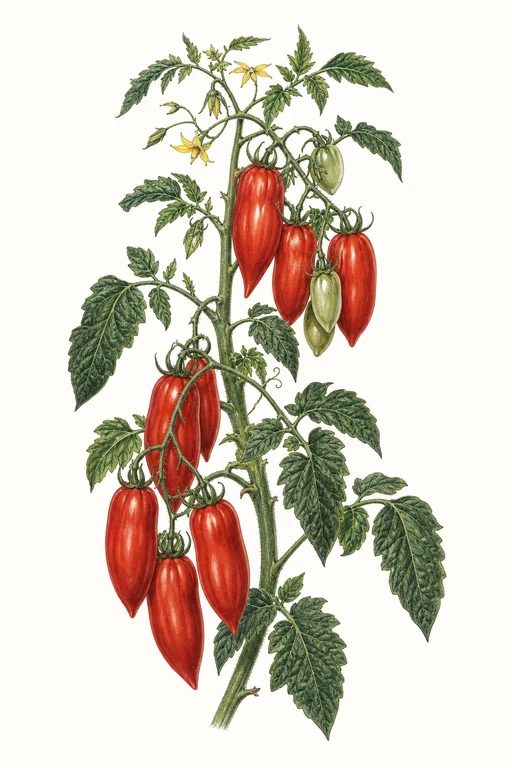
San Marzano Redorta
Sun-warmed and richly aromatic, San Marzano Redorta brings a dense, sweet-tart flavor with a classic “paste tomato” intensity—meaty flesh that clings together beautifully.
At maturity, its elongated fruits hang in tidy clusters, offering a velvety, low-seed texture that shines in thick sauces and slow-simmered favorites, and also performs wonderfully for roasting and preserving. Grow this 75-day standout for a harvest that tastes like tradition—bold, balanced, and deeply tomato-forward.
Light: Full SunMaturity: 75 DaysHabit: Indeterminate
Location not set yet
Location not set yet
Enter your ZIP for local crop dates
San Marzano Redorta Planting Dates by USDA Zone
Estimated US hardiness-zone windows for sow, transplant, and harvest. Enter a US ZIP above for exact local dates, or open a zone below.
| Zone | Start Indoors | Sow / Transplant | Harvest |
|---|---|---|---|
| Zone 1a | Protected Environment Only | ||
| Zone 1b | Protected Environment Only | ||
| Zone 2a | Apr 6th | Jul 20th | Oct 3rd – Aug 29th |
| Zone 2b | Mar 27th | Jul 10th | Sep 23rd – Aug 25th |
| Zone 3a | Mar 27th | Jul 10th | Sep 23rd – Sep 1st |
| Zone 3b | Mar 31st | Jul 14th | Sep 27th – Sep 21st |
| Zone 4a | Mar 27th | Jul 10th | Sep 23rd – Sep 24th |
| Zone 4b | Mar 25th | Jul 8th | Sep 21st – Sep 27th |
| Zone 5a | Mar 20th | Jul 3rd | Sep 16th – Sep 30th |
| Zone 5b | Mar 16th | Jun 29th | Sep 12th – Oct 5th |
| Zone 6a | Mar 13th | Jun 26th | Sep 9th – Oct 10th |
| Zone 6b | Mar 7th | Jun 20th | Sep 3rd – Oct 16th |
| Zone 7a | Mar 2nd | Jun 15th | Aug 29th – Oct 20th |
| Zone 7b | Feb 20th | Jun 5th | Aug 19th – Oct 28th |
| Zone 8a | Feb 11th | May 27th | Aug 10th – Nov 5th |
| Zone 8b | Feb 2nd | May 18th | Aug 1st – Nov 12th |
| Zone 9a | Jan 16th | May 1st | Jul 15th – Nov 26th |
| Zone 9b | Dec 22nd | Apr 6th | Jun 20th – Dec 9th |
| Zone 10a | Continuous Production | ||
| Zone 10b | Continuous Production | ||
| Zone 11a | Continuous Production | ||
| Zone 11b | Continuous Production | ||
| Zone 12a | Continuous Production | ||
| Zone 12b | Continuous Production | ||
| Zone 13a | Continuous Production | ||
| Zone 13b | Continuous Production | ||
Crop Details
| Trait | Value |
|---|---|
| Days to Maturity | 75 |
| Sun Requirements | Full Sun |
| Growth Habit | Indeterminate |
| Support Needed | Stake |
| Planting Depth | Deep |
| Germination Temp (°F) | 75 |
| Min Soil Temp (°F) | 60 |
| Min Night Temp (°F) | 50 |
| Harden Off (days) | 10 |
Culinary Notes

Chef's Note
This is a paste tomato built for reduction: low-seed and meaty, it turns into a sauce that actually clings instead of thinning out. Expect a sweet-tart snap and aromatic depth that holds up when you simmer it hard—perfect for sauces that need to coat pasta with real body.

Best Uses
- thick, slow-simmered passata for weeknight red sauce
- roasting whole or halved for spoonable, caramel-tinged tomato preserves
- hand-crushed canned-style sauce that clings to pasta
- tomato paste style reductions for glossy pan sauces

Flavor Profile

Frequently Asked Questions
What pest or disease problem most often affects Solanum lycopersicum (tomatoes) and how can I stop it early?
How often should I water San Marzano-type tomatoes during peak fruiting?
How do I tell when Solanum lycopersicum ‘San Marzano Redorta’ tomatoes are ready to harvest?
Sowing Tips

Transplant Conditions
Wait until soil reaches 60°F and nights stay above 50°F before moving outdoors. Harden off for 10 days first.
Expert Note

For thick sauces, grow with consistent watering and full sun, and harvest when fully red (avoid early picking to reduce watery texture).