
Scallopini
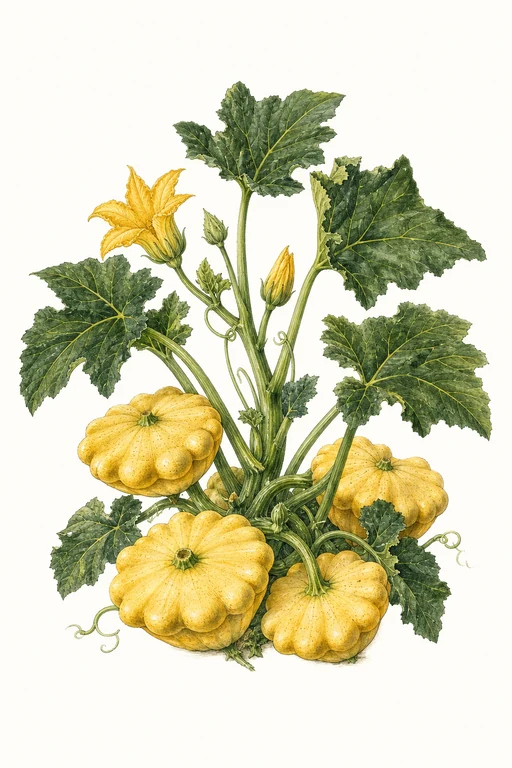
Tender, scalloped pattypans arrive with a sunlit, butter-gold glow and a pleasantly mild, sweet flavor that feels clean and delicate on the palate.
At maturity, the fruits hold a compact, ridged silhouette with a fine, tender skin and a creamy interior—ideal for roasting until lightly bronzed, or for fresh enjoyment when young and crisp. “Scallopini” is a gardener’s delight: quick to fill the bed in about 50 days, producing abundant, market-ready squashes that shine in every harvest basket.
Light: Full SunMaturity: 50 DaysHabit: Mounding
Planting schedules and alerts are optimized for Columbus (Zone 6b).
Crop Dates
| Milestone | Date |
|---|---|
| Start Indoors | May 9th |
| Last Frost | Apr 25th |
| Transplant / Sow Outdoors | May 23rd |
| Harvest Begins | Jul 12th |
| Harvest Ends | Oct 16th |
Crop Details
| Trait | Value |
|---|---|
| Days to Maturity | 50 |
| Sun Requirements | Full Sun |
| Growth Habit | Mounding |
| Support Needed | None |
| Planting Depth | Normal |
| Germination Temp (°F) | 70 |
| Min Soil Temp (°F) | 65 |
| Min Night Temp (°F) | 55 |
| Harden Off (days) | 10 |
Culinary Notes

Chef's Note
These pattypans lean delicate and tender, so you want heat that bronzes the ridges without drying out the creamy interior. Roast, sauté, or grill until just colored—then finish with lemon and butter for that clean, sun-gold squash glow.

Best Uses
- hot-oven roasting until just bronzed at the ridges
- quick sautéing with butter and garlic for a glossy, caramel-edged bite
- brisk grilling or broiling for smoky edges while keeping the centers creamy
- thin-sliced raw toss with lemon and olive oil when harvested young and crisp

Flavor Profile

Frequently Asked Questions
What’s the most common disease problem for Cucurbita pepo (scallopini) and how do I manage it?
How often should I water scallopini (Cucurbita pepo) during the main growing phase?
How can I tell when scallopini (Cucurbita pepo) is ready to harvest?
Sowing Tips

Transplant Conditions
Wait until soil reaches 65°F and nights stay above 55°F before moving outdoors. Harden off for 10 days first.

Direct Sow Preferred
Sensitive roots — does not transplant well. If starting indoors, use biodegradable pots and disturb roots as little as possible when moving outdoors.
Expert Note

For pattypan (Cucurbita pepo), wait for consistently warm weather and soil—cool nights slow growth and can reduce early yield.