
Scarlet Runner
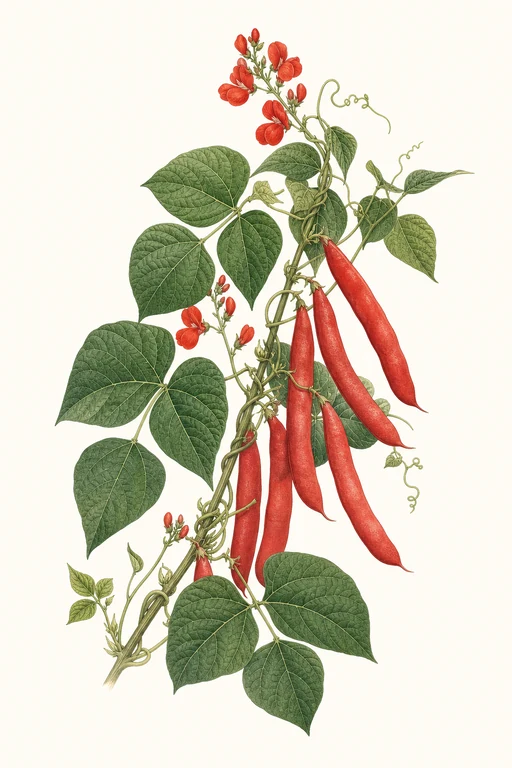
Velvety scarlet blossoms and glossy, deep-green pods set the stage for Scarlet Runner—an exuberant climber that rewards the garden with tender, richly flavored beans.
The pods develop with a crisp snap and a clean, beany sweetness, ideal for fresh use and for turning into vibrant, colorful sides and hearty bean dishes. Grow it for its showy flowers as much as its harvest, and let its climbing vigor bring a living ribbon of color to your beds and trellises.
Light: Full SunMaturity: 85 DaysHabit: Vine
Planting schedules and alerts are optimized for Columbus (Zone 6b).
Crop Dates
| Milestone | Date |
|---|---|
| Start Indoors | Direct Sow |
| Last Frost | Apr 25th |
| Transplant / Sow Outdoors | Apr 25th |
| Harvest Begins | Jul 19th |
| Harvest Ends | Oct 16th |
Crop Details
| Trait | Value |
|---|---|
| Days to Maturity | 85 |
| Sun Requirements | Full Sun |
| Growth Habit | Vine |
| Support Needed | Trellis |
| Planting Depth | Normal |
| Germination Temp (°F) | 70 |
| Min Soil Temp (°F) | 60 |
| Min Night Temp (°F) | 50 |
| Harden Off (days) | Not Required |
Culinary Notes

Chef's Note
Scarlet Runner pods cook fast and—unlike some tougher shelling beans—stay pleasantly crisp, making them ideal for hot, glossy dressings rather than long stews. Their clean sweetness and bright green finish love butter-lemon brightness and smoky, salty proteins.

Best Uses
- quick-sauté with garlic and butter for pods that stay snappy
- steamed and dressed warm with lemon, olive oil, and flaky salt
- stir-fry with ginger and a savory soy-based glaze
- beans-and-grains side where they remain intact, not mushy

Flavor Profile

Frequently Asked Questions
What pests or diseases commonly affect Phaseolus coccineus (scarlet runner bean), and how can I control them?
How often should I water scarlet runner beans during their main growth phase?
How do I know when Phaseolus coccineus is ready to harvest?
Sowing Tips

Transplant Conditions
Wait until soil reaches 60°F and nights stay above 50°F before moving outdoors.
Expert Note

Sow/plant after all danger of frost and provide strong vertical support (runners are vigorous and will quickly climb).