
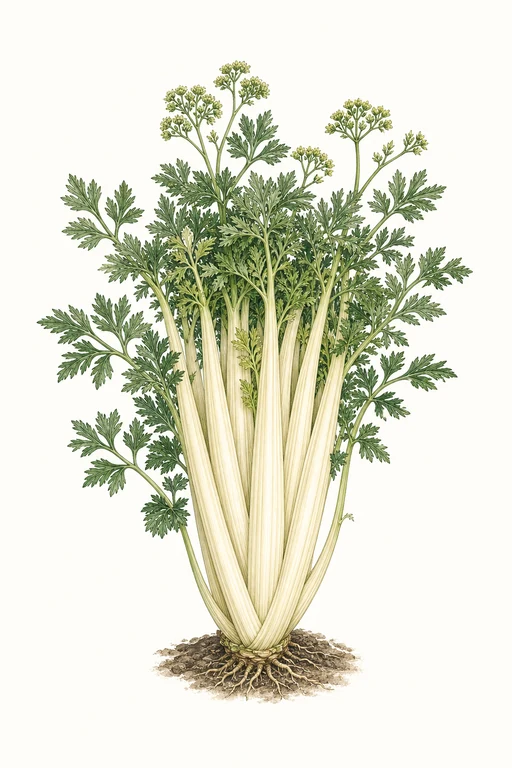
Self-Blanching Celery
Crisp as fresh-cut rain, Self-Blanching Celery forms tender, pale stalks with a naturally mild, sweet bite and a clean, juicy snap.
The self-blanching habit keeps color light and flavor refined without the usual fuss, delivering a velvety texture that stays pleasantly crisp from garden to table. Ideal for snacking, brightening salads, and lending its gentle character to soups, stews, and savory sauces—an elegant, dependable celery for the home grower who loves finesse.
Light: Part SunMaturity: 80 DaysHabit: Upright
Crop Dates : 13a
| Milestone | Date |
|---|---|
| Start Indoors | — |
| Climate | Frost-Free Climate |
| Transplant / Sow Outdoors | Oct 1st |
| Harvest Begins | Dec 20th |
| Harvest Ends | Feb 28th |
Crop Details
| Trait | Value |
|---|---|
| Days to Maturity | 80 |
| Sun Requirements | Part Sun |
| Growth Habit | Upright |
| Support Needed | None |
| Planting Depth | Normal |
| Germination Temp (°F) | 70 |
| Min Soil Temp (°F) | 40 |
| Min Night Temp (°F) | 28 |
| Harden Off (days) | 7 |
Culinary Notes

Chef's Note
Self-blanching celery earns its keep by staying pale and mild, so it gives you clean aromatics without that sharp edge. Use it raw for a rain-crisp snap, or let it simmer just until glossy—then hit it with lemon and keep the texture bright.

Best Uses
- snack-ready raw sticks and shaved batons (stays pale and crisp)
- salad or slaw where you want crisp texture without aggressive bitterness
- stock, soups, and stews for a gentle aromatic base
- light pan sauces—quick-simmered until glossy, then finished for crunch

Flavor Profile

Frequently Asked Questions
What pest or disease most commonly affects self-blanching celery (Apium graveolens var. dulce), and how can I prevent it?
During the main growing phase, how often should I water self-blanching celery to keep it from becoming tough or bitter?
How do I tell when self-blanching celery is ready to harvest (Apium graveolens var. dulce)?
Sowing Tips

Transplant Conditions
Wait until soil reaches 40°F and nights stay above 28°F before moving outdoors. Harden off for 7 days first.
Expert Note

Start celery early and keep seedlings consistently moist; once nights warm, transplant into rich soil and mulch to keep stalks crisp (self-blanching still benefits from gradual earthing up).