
Self-Blanching
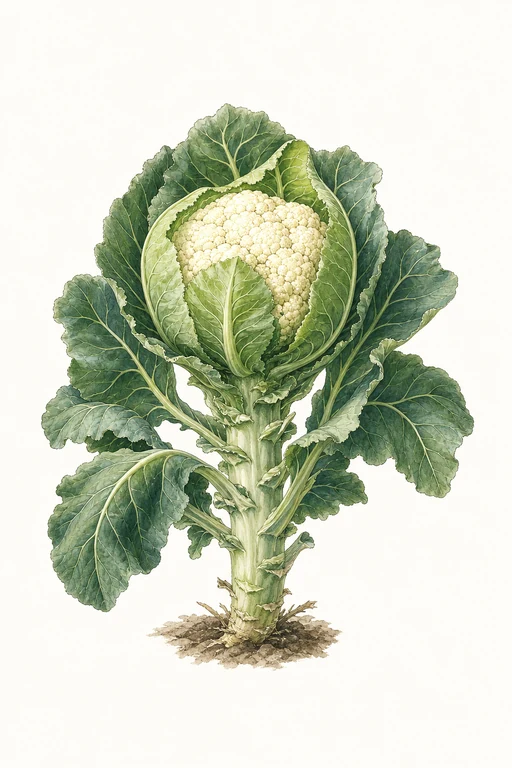
A velvet-soft cauliflower that seems to dress itself for the market—Self-Blanching forms a compact head that turns creamy pale while the surrounding leaves naturally shade and protect it.
Expect a fine, tender texture with a mild, sweet flavor that shines in simple preparations, from roasting to steaming, and it also lends itself beautifully to smooth sauces and pickling-style preserves. Grow it for that satisfying moment when the curds fill out tight and uniform at about 75 days, ready to become the centerpiece of your harvest basket.
Light: Full SunMaturity: 75 DaysHabit: Rosette
Planting schedules and alerts are optimized for Columbus (Zone 6b).
Crop Dates
| Milestone | Date |
|---|---|
| Start Indoors | Mar 28th |
| Last Frost | Apr 25th |
| Transplant / Sow Outdoors | Apr 18th |
| Harvest Begins | Jul 2nd |
| Harvest Ends | Oct 16th |
Crop Details
| Trait | Value |
|---|---|
| Days to Maturity | 75 |
| Sun Requirements | Full Sun |
| Growth Habit | Rosette |
| Support Needed | None |
| Planting Depth | Normal |
| Germination Temp (°F) | 75 |
| Min Soil Temp (°F) | 40 |
| Min Night Temp (°F) | 32 |
| Harden Off (days) | 6 |
Culinary Notes

Chef's Note
This self-blanching head is all about uniform, tender curds—cook it gently and it turns luxuriously creamy without tasting cabbagey. Let it roast hard for color at the edges, or puree it into a velvety sauce that clings to pasta and bread instead of going watery.

Best Uses
- hot-oven roasting until the edges bronze and crisp while the center stays creamy
- steaming or blanching for a silky, spoonable texture
- pureeing into a smooth gratin sauce or soup base
- quick pickling-style preserves for a tangy crunch

Flavor Profile

Frequently Asked Questions
What pest or disease commonly affects self-blanching Brassica oleracea var. botrytis, and how can I manage it?
How often should I water self-blanching Brassica oleracea var. botrytis during the main growing phase?
How do I tell when self-blanching Brassica oleracea var. botrytis is ready to harvest?
Sowing Tips

Transplant Conditions
Wait until soil reaches 40°F and nights stay above 32°F before moving outdoors. Harden off for 6 days first.
Expert Note

Keep soil evenly moist and shade/indirectly protect the curd early if summer heat shows up, even though it self-blanching to some degree.